ISO 105-B02 Colour Fastness of Textiles - Light Fastness Tester

ISO 105-B02 Colour Fastness of Textiles - Light Fastness Tester
ISO 105-B02 is a testing standard published by the International Organisation for Standardisation (ISO) concerning the lightfastness of textiles. This standard specifies a method for evaluating the lightfastness of textiles by simulating exposure to daylight (D65 light source) using a xenon arc lamp apparatus.
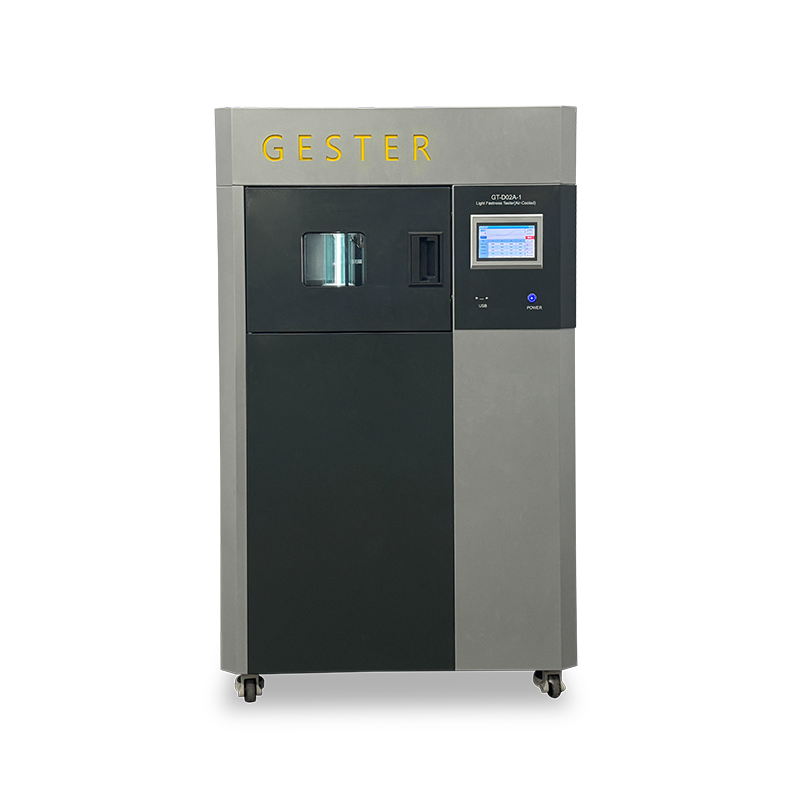
Light Fastness Tester

Scope of ISO 105-B02


ISO 105-B02 applies to determining the colourfastness performance of various types and forms of textiles to artificial light sources (simulating natural daylight D65), including white textiles (bleached or fluorescent white).

Requirements for Test Equipment under ISO 105-B02


Light Source: ISO 105-B02 specifies that xenon arc lamp apparatus must possess a stable light source and filter system capable of simulating the spectral distribution of daylight.

Filters and heat filters: Filters are used to stably attenuate the ultraviolet spectrum, while heat filters stably attenuate infrared radiation. Filter transmittance must be at least 90% between 380 nm and 750 nm, dropping to 0% between 310 nm and 320 nm.

Temperature: Depending on test conditions (e.g., temperate conditions commonly used in Europe or American conditions), the black panel temperature varies, typically ranging between 50°C and 63°C.

Irradiance: Radiation intensity is measured using a radiometer, with a recommended value of 42 W/m² (at wavelengths between 300 nm and 400 nm), equivalent to 1.1 W/m² (at 420 nm) in water-cooled xenon lamp equipment.
GESTER Light Fastness Tester GT-D02A-1


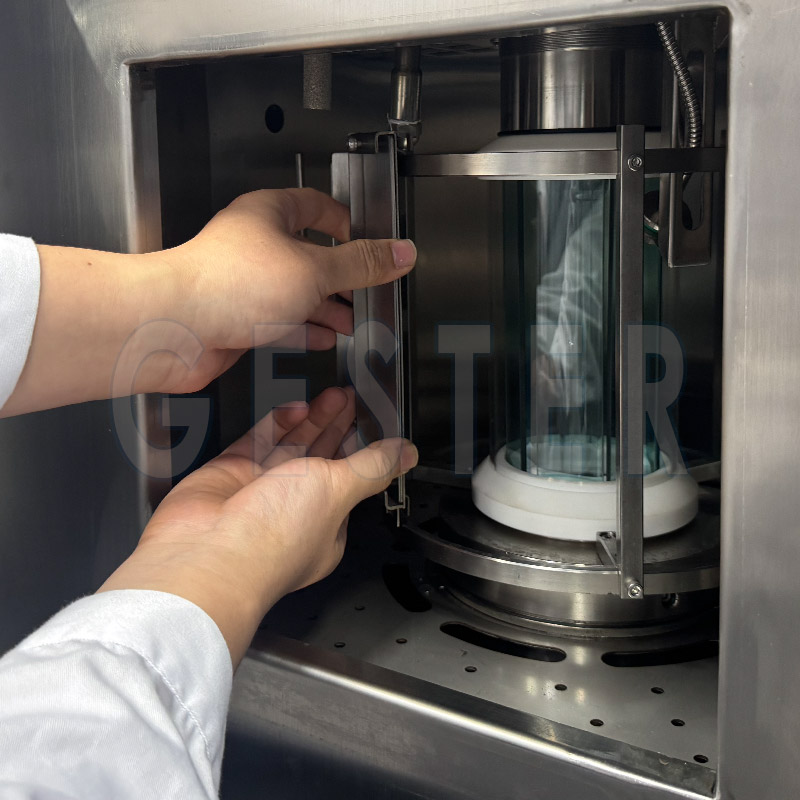
This light fastness tester apply to light color fastness, anti-climate color fastness, light & perspiration color fastness and light aging tests of textile, paint, dye, coating, rubber, plastic, wood floor, paper and other materials, it have anti-climate functions of exposing to the rain, revolution and mist spraying


Light Fastness Tester


Feature


  • The 2500W long arc xenon lamp is used to simulate the solar spectrum.


  • Xenon Light Fastness Tester: High transmittance of filter combinations and use 95% of the transmittance filters and filter cartridges. With Low power consumption but achieve the same irradiation light requirements. To make the machine is more energy saving and environment friendly.


  • Standard equipped with 420nm wave band, irradiance digital setting, real time monitoring,  closed loop automatic regulation, providing the most stable irradiance test light source for different standards (340nm, 420nm, 300-400nm and 300-800nm band optional ).


  • With several modes of operation (spray, alternating light and dark, revolution), can simulate the real climate state.


  • Individual timing of each sample clamp may enable different sample test in a same tester and facilitate test monitor and reduce operation cost.

Standards of ISO 105-B02 Light Fastness Tester


GB/T 8427, GB/T 8430, GB/T 14576, GB/T 15102, GB/T 15104, ISO 105-B02/B04,
ISO 105-B10(requires irradiance meter 300-400nm), ISO 12040, ISO 11341,
ATCC TM 16, AATCC 169, ASTM D5010, ASTM D4303,1, JIS L0843, M&S C09/C09A


Gold Standard Teams + HF988D-PLUS, Dual Drivers for Development

To respond to the company's strategic requirements of lean production, continuous improvement, and enhancing front line management capabilities, as well as to inspire all employees' enthusiasm for "competing, learning, catching up, supporting, and surpassing", H-FANG held the kick-off meeting of the "Gold Standard Team Building Project" on June 30th, laying a solid foundation for the enterprise's high-quality development through management upgrading.


The project will last three months, with the first assembly workshop as the pilot team. Its core goal is to build a benchmark team with full implementation of HF988DP standard operations—accumulating replicable experience for the subsequent standardized and institutionalized management of teams across the company. Meanwhile, with skill proficiency, team positivity, job responsibility, and cross-departmental communication as core evaluation criteria, it plans to cultivate over 3 "Gold Standard Coaches". In the future, these coaches will serve as dual benchmarks for technology and professionalism, driving the improvement of all employees' skills and comprehensive quality to help the company break through bottlenecks and pursue higher goals.


While consolidating internal management, H-FANG has also keenly grasped market changes: downstream customers’ requirements for fabric quality keep rising, and enterprise production cost pressure increases. The industry’s demand for high-efficiency textile equipment that "reduces waste in production & development and lowers dependence on employees' skills" has become more urgent. Coinciding with its 30th anniversary, the company has fully upgraded its first-generation section warping machine HF988C and launched the new 988D-PLUS—relying on 30 years of technical accumulation to help new and old customers cut costs and boost efficiency, and respond to market expectations with product innovation.

As a core upgraded product, the 988D-PLUS section warping machine focuses on "easy operation and low defect rate", especially suitable for weaving users of sizing-free yarns. Its upgrading highlights cover three core dimensions:

  • Humanized Appearance & Detail Optimization: The upgraded equipment has a more industrial-designed look. It also optimizes button layout and improves yarn pressing roller structure to fit operators’ actual needs—reducing operational complexity, improving labor efficiency, and fundamentally reducing common industry defects like section marks.

  • Leapfrog Efficiency Improvement: The maximum warping speed increases from 600m/min (original model) to 800m/min, and the beaming speed rises from 120m/min to 250m/min—greatly shortening the single-batch production cycle and helping customers boost capacity.

  • Configuration Upgrade & Energy Saving: Key components are fully upgraded to enhance equipment stability and durability; meanwhile, energy consumption is reduced through technical improvements, helping customers control costs while improving quality.

Beyond the above core upgrades, the 988D-PLUS also has many detailed designs meeting actual production needs. If you are interested in more technical parameters or adaptation solutions, please contact us for exclusive consultation.


2025 Cleaning Equipment Market Overview Intelligent, Green, and New Opportunities on the Horizon.

Cleaning Equipment Market


Future Outlook

Abstract

The global cleaning equipment market is gradually transitioning from “traditional machinery” to an era of “intelligent systems + green manufacturing.” Data indicates that the global industrial cleaning equipment market size reached approximately $10.6 billion in 2024, projected to grow to around $15.6 billion by 2033, with a compound annual growth rate (CAGR) of approximately 4.4%. Faced with the triple pressures of efficiency improvement, cost control, and environmental requirements, intelligent operation, unmanned capabilities, and energy efficiency have become focal points for both manufacturers and customers. This article will provide insights into the three major trends shaping the industry and explore how these developments create new opportunities for cleaning equipment manufacturers, distributors, and end-users.


Efficiency Dividend: From “Manual Labor + Mop” to “Mechanization + Automation”


Traditional cleaning methods rely heavily on manual labor, involve cumbersome operations, and struggle to guarantee efficiency. Equipment-based cleaning has become the industry standard. For instance, a ride-on scrubber or a combined sweeper-scrubber can cover several times the area of manual cleaning. Meanwhile, the 2025 industry report also notes that “automation and intelligent technologies are no longer experimental projects but essential for daily operations. For property management, factory workshops, and large commercial centers, enhanced cleaning equipment efficiency translates to: reduced labor requirements, shorter cleaning durations, increased cleaning frequency, and ultimately lower operational costs alongside superior service experiences.”


The Wave of Intelligence: Appliances That Not Only “Wash” But Also “Think”


As IoT, sensors, and data analytics technologies integrate into cleaning equipment, manufacturers are transitioning from single mechanical tools to “cleaning systems + service platforms.” The 2025 Trend Report indicates that cloud connectivity, real-time monitoring, path planning, and fault alerts are becoming industry standards.


The benefits brought by intelligent technology include:

  • Cleanup tasks are logged and traceable;
  • Early warning of equipment failures to minimize downtime;
  • Data-driven decision-making enables more scientific approaches, from frequency adjustments to resource allocation.


For clients seeking to establish a branded, standardized cleaning service system, this represents an essential transition from “reactive cleaning” to “intelligent management.”


Green Environmental Protection: Energy Conservation and Emission Reduction Become Hard Targets

Cleaning Equipment

Environmental protection, green manufacturing, and ESG standards are profoundly reshaping the cleaning equipment market. High-capacity lithium batteries replacing lead-acid batteries, water-saving technology adoption, noise reduction, and low exhaust emissions have become key areas where manufacturers compete for differentiation. For end-users such as shopping malls, hospitals, and transportation hubs, selecting eco-friendly equipment not only reduces energy consumption and maintenance costs but also enhances brand image and social responsibility. Consequently, the market is witnessing a trend toward premium pricing and preferential procurement for “green cleaning equipment.”


Regional Opportunity Watch: Rapid Expansion of Market Share in Asia-Pacific


Although North American and European markets are mature, the Asia-Pacific region is emerging as the fastest-growing blue ocean. Research indicates that industrialization and urbanization in Asia—particularly in China and India—are driving rapid growth in demand for cleaning equipment.

For equipment manufacturers and distributors, this means: possessing localized service capabilities, understanding regional variations in cleaning needs, and offering flexible product portfolios tailored to small-to-medium-sized scenarios.


Dealer Alert: How to Seize the Next Growth Curve?

Cleaning Equipment

  1. Product Upgrade: Advancing toward intelligent, electric, and modular solutions to ensure products remain competitive for the next 5–10 years.
  2. Service system development: Beyond merely selling equipment, we must establish training, leasing, and full lifecycle service capabilities to enhance customer loyalty.
  3. Channel Expansion: Actively expand into tier-2 and tier-3 cities and overseas markets, establishing localized service and spare parts supply systems.
  4. Market Segmentation: Don't just focus on large venues and major clients. Small-to-medium-sized scenarios—such as hospital corridors, community commercial spaces, and parking garages—are emerging as high-volume yet low-competition opportunities.


Conclusion


In 2025, the cleaning equipment industry stands at a pivotal juncture of transition and innovation. A brand's ability to “operate swiftly, deliver precision, and provide exceptional service” will determine its success in this wave of change. Cleaning equipment has evolved from mere ‘tools’ into comprehensive “solutions,” with true value now residing in the service systems and operational efficiency beyond the equipment itself.


END


Reference: https://straitsresearch.com/report/industrial-cleaning-equipment-market

5 Innovations That Improve Tile Cutting Accuracy


In tile installation, accuracy is everything. Whether you're cutting a porcelain slab for a high-end hotel or ceramic tiles for a modern kitchen, even the smallest deviation can ruin alignment and waste material.

Thankfully, new technologies are making precision easier than ever. Wandeli, a global leader in electric tile cutting innovation, integrates multiple design improvements that ensure every cut is clean, consistent, and professional.

Here are five key innovations that are redefining tile cutting accuracy.


1. Laser-Guided Alignment Systems

Forget manual chalk lines or guesswork. Laser guidance has become the new industry standard, ensuring each cut follows an exact straight path with zero margin for error.

Wandeli’s built-in laser alignment systems give contractors real-time visibility — reducing mistakes, especially on large-format tiles.

🔗 Learn why precision matters in modern tile installation


2. Brushless Motor Power Stability

Traditional brushed motors often fluctuate under load, causing inconsistent torque and cut depth.

Wandeli’s brushless motor technology maintains a steady power output for consistent blade speed — ensuring clean, uniform cuts from start to finish.

🔗 Compare brushed vs. brushless motor performance


3. Water Cooling Systems for Heat Control

Precision drops when blades overheat. Heat causes material expansion and blade warping — both enemies of accuracy.

Wandeli’s integrated water cooling system stabilizes cutting temperatures, minimizes friction, and extends both motor and blade life.

🔗 Discover why water cooling matters


4. Advanced Rail and Glide Systems

Smooth motion equals accurate results.
Wandeli uses high-precision linear rails and bearing-assisted carriages that keep every movement controlled and vibration-free — even on long cuts.

This ensures perfect alignment and eliminates micro-wobbling that leads to uneven cuts or chipped edges.

🔗 See Wandeli automatic cutting machines


5. Intelligent Automation and Consistent Feed Control

Manual pressure often causes cut variations. With automatic feed systems, Wandeli ensures the cutting speed remains constant throughout the pass, producing repeatable precision every time.

This is especially useful for high-volume contractors or factory applications.

🔗 Read how automation is transforming the tile cutting industry


Customer Testimonials

“The laser and automatic feed combo make every cut perfect — we’ve eliminated rework completely.”
— ProTile Solutions, USA

“We’ve tried other brands, but Wandeli’s accuracy stands out. Every project looks flawless.”
— BuildPro Contractors, Malaysia


FAQs

Q1: What makes laser-guided cutting more accurate?
A: It visually aligns each cut line, ensuring straight and precise results even over long tiles.

Q2: Do water cooling systems improve cutting quality?
A: Yes, they prevent blade distortion and maintain smooth, stable motion throughout each cut.

Q3: Are automatic tile cutters suitable for beginners?
A: Absolutely. Wandeli’s automated systems are user-friendly and reduce operator fatigue.


Final Thoughts

Tile cutting accuracy isn’t just about sharp blades — it’s about the technology behind the tool.

Wandeli combines laser precision, brushless power, water cooling, and automation to deliver unmatched results. Every innovation works together to help professionals achieve perfection — cut after cut.


🔗 Explore Wandeli’s range of precision tile cutting machines

Becoming a Wandeli Dealer What Partners Should Know


As construction across Southeast Asia continues to grow, demand for professional-grade tile and stone cutting equipment is at an all-time high.

For retailers, distributors, and supply companies, partnering with Wandeli Machinery offers a strategic opportunity to bring proven, high-performance https://www.wandelimachine.com/products to their local markets — backed by a trusted global brand.

Here’s everything you need to know about becoming an authorized Wandeli dealer.


1. A Trusted Global Brand with Proven Demand

Wandeli has earned a solid reputation in China, Europe, the U.S., and Southeast Asia for delivering reliable, precision-engineered cutting machines that contractors trust.

Dealers benefit from selling https://www.wandelimachine.com/products already known for durability, innovation, and long-term performance.

🔗 See why distributors choose Wandeli


2. Diverse Product Range for Multiple Markets

From compact manual models like the QX-800 to industrial-grade machines like the QXZ-ZD-1800, Wandeli offers a comprehensive lineup that caters to residential installers, commercial builders, and factory applications.

This wide range allows dealers to reach multiple customer segments — from small contractors to construction enterprises.

🔗 Compare QX vs. QXZ tile cutting machines


3. Marketing and Technical Support for Dealers

Authorized dealers receive complete brand support, including:

  • Product catalogs and technical documents

  • Promotional images and https://www.wandelimachine.com/videos for online sales

  • Training on machine operation and maintenance

This ensures every Wandeli dealer is equipped to sell confidently and support their customers effectively.

🔗 Visit Wandeli Video Center for product demonstrations


4. Reliable Supply and Regional Logistics

Wandeli’s efficient production and export system guarantees consistent inventory and fast shipping.

Whether supplying retailers in Malaysia or distributors in the Philippines, Wandeli’s logistics ensure timely delivery — even for bulk orders.

🔗 Contact Wandeli for regional dealership inquiries


5. Long-Term Partnership and Profitability

Becoming a Wandeli dealer means more than distribution — it’s about joining a growth partnership.

Dealers gain access to early product releases, favorable pricing, and region-specific promotions, ensuring both competitive advantage and long-term profitability.

🔗 Explore Wandeli’s automatic electric tile cutting machines


Customer Testimonials

“Partnering with Wandeli was one of our best business decisions — high demand, great support, and reliable supply.”
— MegaTiles Distributor, Indonesia

“Our customers trust Wandeli’s machines. After-sales support makes all the difference.”
— TileMart Tools, Malaysia


FAQs

Q1: Who can become a Wandeli dealer?
A: Distributors, wholesalers, or construction supply companies with an established market presence.

Q2: Is there a minimum order requirement?
A: Yes. Initial dealership packages are tailored by region and order volume.

Q3: What after-sales support does Wandeli provide?
A: Training, spare parts access, technical documents, and online support.


Final Thoughts

Wandeli’s dealer program is designed to build strong, lasting partnerships. With a proven product range, reliable logistics, and dedicated support, it’s the perfect opportunity for distributors aiming to expand in Southeast Asia and beyond.

If you’re looking to represent a trusted global brand in tile cutting innovation — Wandeli welcomes your partnership.


🔗 Apply to become an authorized Wandeli dealer

Brushless Motors vs. Brushed Which Tile Cutter Lasts Longer?


In professional tile cutting, performance isn’t just about speed — it’s about reliability. The heart of every electric tile cutter lies in its motor, and understanding the difference between brushless and brushed motors can make a major impact on your long-term investment.

Let’s explore how these two motor types compare, and why Wandeli’s brushless technology has become the preferred choice for contractors worldwide.


1. What’s the Difference Between Brushed and Brushless Motors?

Traditional brushed motors use carbon brushes that make contact with the rotor to generate power. Over time, these brushes wear out, reducing performance and requiring replacement.

Brushless motors, on the other hand, use electronic controllers to deliver power without friction — meaning smoother performance, higher efficiency, and less maintenance.

🔗 Learn more about Wandeli’s brushless motor system


2. Performance and Efficiency

Brushed motors convert less energy into cutting torque because friction from the brushes causes heat and resistance. This leads to power loss during extended cutting sessions.

In contrast, Wandeli brushless cutters operate at over 85% energy efficiency, maintaining consistent speed and torque even under heavy loads. This translates into cleaner cuts and better performance on tough materials like porcelain and stone.

🔗 Explore Wandeli automatic electric tile cutting machines


3. Maintenance and Durability

One of the biggest advantages of brushless motors is reduced wear and tear. Since there are no brushes to replace, the internal components last significantly longer.

Wandeli brushless models such as the QX-ZD-1200 and QXZ-ZD-1800 have become industry favorites for their low-maintenance reliability — perfect for contractors who work daily and can’t afford downtime.

🔗 See heavy-duty models like the QXZ-ZD-1800


4. Heat Management and Cooling

Heat buildup is one of the main reasons motors fail early. Brushed motors generate more internal heat due to friction.

Wandeli’s brushless systems, combined with water-cooled diamond blades, minimize both motor and blade temperature. This dual system ensures long-term performance even during continuous cutting in hot climates.

🔗 Read why water cooling matters in tile cutting


5. Which One Lasts Longer?

In real-world usage, a brushless motor lasts up to 5 times longer than a brushed equivalent. The reason is simple: fewer moving parts, less friction, and stable power delivery.

Contractors who rely on their tools every day see the difference — less maintenance, longer machine life, and more consistent results across every project.


Customer Testimonials

“Our old brushed machines needed servicing every few months. The brushless Wandeli hasn’t missed a beat in over a year.”
— ProTile Contractors, California

“Brushless technology changed everything. Longer life, less noise, and zero downtime.”
— Ceramix Build, Malaysia


FAQs

Q1: Are brushless tile cutters more expensive?
A: Initially, yes — but they save money long-term due to lower maintenance and longer lifespan.

Q2: Can I replace a brushed motor with a brushless one?
A: Not directly. Brushless systems require specialized electronic controllers integrated into Wandeli’s design.

Q3: Do brushless motors need cooling?
A: Yes, even efficient motors generate heat — that’s why Wandeli pairs them with water-cooling systems for maximum performance.


Final Thoughts

While brushed motors still serve basic applications, professional installers increasingly prefer brushless tile cutters for their power, efficiency, and endurance.

Wandeli’s brushless series — combining water cooling, laser guidance, and precision automation — represents the future of tile cutting technology. For those who value productivity and performance, it’s not just an upgrade — it’s a long-term investment.

🔗 Discover Wandeli’s brushless motor tile cutting machines

Customer Success Stories How Wandeli Machines Increased Contractor Productivity


In the world of construction and tile installation, results speak louder than specifications.

Contractors across Asia-Pacific, Europe, and the U.S. have discovered how Wandeli’s automatic tile and stone cutting machines help them save time, reduce waste, and deliver higher-quality finishes — job after job.

Here’s how real customers are transforming their businesses with Wandeli technology.


1. Efficiency That Reduces Cutting Time by Half

Case Study: BuildCraft Tiling, Indonesia

Before switching to Wandeli, BuildCraft’s tile installers were losing hours daily due to manual cutting fatigue and frequent alignment errors.

After adopting the QXZ-ZD-1200 automatic electric tile cutter, their team reduced project timelines by 50%.
The machine’s automatic feed system and water cooling ensured continuous, accurate performance — even on large porcelain slabs.

“We complete more projects now with fewer workers. The consistency and speed are game changers.”
— Project Supervisor, BuildCraft Tiling

🔗 Learn how automation transforms cutting performance


2. Precision That Eliminates Tile Waste

Case Study: EliteStone Interiors, Thailand

Cutting high-value granite and marble used to result in heavy material losses — every chip was expensive.

With the QXZ-ZD-1800, EliteStone saw a 30% reduction in material waste thanks to the laser-guided alignment system and stable dual-rail glide motion.

“The precision is unmatched. Every cut is smooth, even on thick stone. We’ve nearly eliminated waste.”
— Operations Manager, EliteStone Interiors

🔗 See how precision innovations improve cutting accuracy


3. Reduced Operator Fatigue and Training Time

Case Study: ProTile Contractors, Malaysia

Manual cutting caused inconsistent results due to human error and exhaustion.
After adopting the QX-1200 semi-automatic cutter, operators no longer needed to exert pressure manually.

Training time dropped by 40%, and workers could complete more cuts per day with less effort.

“Wandeli machines are intuitive — even new workers learn to use them quickly. Productivity jumped almost immediately.”
— Head Supervisor, ProTile Contractors

🔗 Why contractors are switching to electric tile cutters


4. Consistency for Large-Scale Projects

Case Study: GlobalBuild Developments, Philippines

In large commercial projects, even a small variation in tile size can lead to uneven installation.
Using Wandeli’s automatic QXZ series, GlobalBuild ensured every cut met exact specifications — improving project consistency and client satisfaction.

“We’ve used Wandeli machines for months without a single adjustment needed. They cut true every time.”
— Construction Engineer, GlobalBuild Developments

🔗 Explore Wandeli’s automatic electric tile cutting machines


5. Lower Costs and Higher Profit Margins

Case Study: MarblePro Construction, Singapore

Manual tools led to frequent blade replacements and rework costs.
After switching to Wandeli’s brushless motor technology, energy efficiency and blade life improved dramatically.

The company reported a 15% increase in profit margins within the first three months of use.

“Less downtime, less waste, and no overheating issues — that’s the kind of performance that pays off.”
— Project Director, MarblePro Construction

🔗 How Wandeli machines improve ROI for tile installers


FAQs

Q1: Are these results typical for all contractors?
A: While outcomes vary by project size and materials, most Wandeli users report improved productivity, reduced waste, and faster job completion.

Q2: Do Wandeli machines require special training?
A: No. Machines are user-friendly, and operators can typically master them within a few hours.

Q3: Are there financing or bulk purchase options?
A: Yes. Authorized dealers offer flexible packages for distributors and large-scale buyers.


Final Thoughts

Every project is different — but contractors around the world share one result: greater productivity with Wandeli.

From small workshops to industrial tile factories, Wandeli’s commitment to innovation and precision helps professionals save time, lower costs, and deliver exceptional quality.

When performance meets reliability, success becomes repeatable.
That’s the Wandeli advantage.


🔗 Join the growing network of Wandeli users

How Automation Is Changing Tile Manufacturing


The construction materials industry is undergoing a technological revolution.
Where once manual labor defined tile manufacturing and installation, automation and precision machinery are now setting new benchmarks for speed, accuracy, and efficiency.

At the forefront of this change is Wandeli Machinery, a company that has seamlessly blended innovation, reliability, and user-centered engineering to help manufacturers and contractors meet modern demands.

Here’s how automation is reshaping the world of tile manufacturing — and why Wandeli is leading the way.


1. Automation Increases Production Speed

Traditional tile cutting relies heavily on manual operators, which limits productivity and introduces variability in quality.

Wandeli’s automatic electric tile cutters, such as the QXZ-ZD-1200, feature auto-feed systems that maintain consistent speed and cutting pressure — dramatically reducing human error and manual fatigue.

Manufacturers can now cut hundreds of tiles per hour, maintaining exact measurements without deviation.

🔗 Read how automation transforms tile cutting


2. Precision Engineering Improves Product Consistency

Automation ensures every tile is cut with identical dimensions and perfect edges, which is crucial for large-scale production.

Wandeli integrates laser-guided systems and dual-rail stabilization to ensure perfect alignment and symmetry — critical for tiles destined for export or commercial-grade installations.

🔗 Learn how precision innovations improve cutting accuracy


3. Reduced Waste and Energy Efficiency

Manual cutting often leads to chipped tiles, off-spec sizing, and wasted materials.

Automated machines minimize waste through controlled motion and accurate measurement, improving material utilization and reducing costs.

Wandeli’s brushless motor technology also consumes less energy while maintaining high torque, aligning automation with sustainability goals.

🔗 See how Wandeli supports sustainable construction practices


4. Lower Labor Costs, Higher Skill Efficiency

Automation doesn’t eliminate the need for workers — it enhances their capabilities.

Operators can now supervise multiple machines simultaneously, focus on quality control, and ensure operational efficiency instead of repetitive manual cutting.

This shift from labor-intensive work to technician-driven processes helps companies save on manpower costs while improving workplace safety and morale.

🔗 How Wandeli machines improve ROI for tile installers


5. Integrated Systems for Smart Manufacturing

As the industry moves toward Industry 4.0, automation is no longer just about machinery — it’s about intelligent systems that integrate cutting, inspection, and quality control.

Wandeli’s advanced automation design allows easy integration with factory production lines, paving the way for smart, continuous tile manufacturing.

🔗 Explore Wandeli’s automatic tile cutting machine lineup


Customer Testimonials

“After automating our cutting line with Wandeli machines, our efficiency improved by over 40%. The precision and reliability are unmatched.”
— TileWorks Manufacturing, Vietnam

“We replaced manual cutters with Wandeli auto-feed systems — waste dropped significantly, and our operators handle twice the workload.”
— SmartBuild Tiles, Indonesia


FAQs

Q1: What’s the main benefit of automation in tile manufacturing?
A: Consistent accuracy, faster production cycles, and lower material waste — leading to improved profitability.

Q2: Are Wandeli machines suitable for factory-level production?
A: Yes. The QXZ series is designed for continuous operation in manufacturing environments.

Q3: Can automated tile cutters handle all materials?
A: Absolutely. With proper blades and cooling, they can cut ceramic, porcelain, marble, and granite efficiently.


Final Thoughts

Automation is transforming tile manufacturing from a manual process into a precise, scalable, and sustainable operation.

With Wandeli’s innovations — from brushless motors to intelligent feed systems — contractors and manufacturers can stay ahead of market demands and boost productivity with confidence.

The future of tile production is smart, efficient, and powered by Wandeli.

🔗 Discover Wandeli’s advanced automation solutions

How to Choose the Right Electric Tile Cutter for Professional Jobs


For tile installers in the U.S., choosing the right cutting machine can determine the success — or failure — of a project. With so many materials, formats, and finishes in today’s market, a one-size-fits-all approach no longer works. This is where Wandeli’s range of electric tile cutters gives professionals the flexibility they need.

Here’s a guide on how to select the perfect tile cutter for your next job.


1. Match Power to Material

Different materials demand different cutting strength. For porcelain and granite, a brushless motor model like the QX-ZD-1200 ensures smooth, chip-free cuts.

🔗 See Wandeli brushless motor cutters


2. Consider Cutting Length

Large-format tiles are trending in U.S. design. Choose a cutter that accommodates your most common tile sizes — from 800mm to 1800mm.
🔗 Explore large-format cutting options


3. Check for Water Cooling Systems

A water-cooled diamond blade minimizes overheating, dust, and blade wear — essential for continuous cutting in professional settings.
🔗 Learn why water cooling matters


4. Prioritize Durability and Ease of Maintenance

Choose a cutter with stainless or aluminum construction for longevity. Wandeli’s precision engineering ensures every machine is ready for heavy-duty use.


5. Look for Laser Guidance and Automation

For high-precision and repeatable cuts, laser-guided automation ensures the perfect finish every time — ideal for contractors managing multiple projects.


Customer Testimonials

“The QX-ZD-1200 has become our go-to cutter for both porcelain and granite. Reliable and accurate.”
— ProCraft Installers, Texas

“Choosing the right Wandeli model was easy — each one is clearly designed for professional use.”
— Marble & Tile Works, Florida


FAQs

Q1: Which Wandeli model suits most professional installers?
A: The QX-ZD-1200 is ideal for medium to large projects; the QXZ-ZD-1800 suits heavy-duty commercial jobs.

Q2: Do all models include laser guidance?
A: Yes, most Wandeli cutters include built-in laser alignment systems for precise cutting.


Q3: Can these machines handle continuous use?
A: Absolutely. Brushless motors and water-cooling systems are designed for sustained operation.

How to Maintain Your Electric Tile Cutter for Long-Term Efficiency


Professional tile cutters are an investment — and like any precision tool, they perform best with regular maintenance. Proper care ensures your machine runs smoothly, cuts accurately, and lasts for years.

Whether you use your tile cutter daily on-site or in a workshop, following these simple maintenance steps can dramatically extend its lifespan and protect your investment.

Here’s how to keep your Wandeli electric tile cutter in top condition.


1. Keep the Cutting Table and Rails Clean

Dust, slurry, and debris can accumulate on the cutting rails and table surface, affecting precision and causing friction.

After each use, clean the table with a soft cloth and mild detergent. For water-cooled machines, always flush and dry the water tray to prevent buildup or corrosion.

🔗 Discover 5 innovations that improve tile cutting accuracy


2. Maintain the Water Cooling System

If your tile cutter uses a water cooling system, inspect the hoses and water pump regularly. Sediment or mineral buildup can block the flow, leading to overheating or poor cooling efficiency.

Use clean water and, if possible, replace the water daily on high-usage jobs. This prevents contaminants from reducing cooling effectiveness.

🔗 Why water cooling matters in tile cutting machines


3. Check and Replace Blades Periodically

A dull or chipped blade won’t just slow your work — it can cause uneven cuts or tile breakage.

Inspect your diamond blades regularly for wear and tear. Replace them immediately when performance drops, as forcing a blunt blade increases stress on the motor and rails.

🔗 Learn how to choose the best cutter for porcelain, ceramic, and stone


4. Lubricate the Rail System and Bearings

Smooth glide rails ensure cutting accuracy. Use a light lubricant or manufacturer-recommended oil to keep the rails and bearings free from friction and rust.

Avoid over-lubricating, as excess oil can attract dust and debris. Consistent care ensures long-term performance and prevents uneven motion.

🔗 Explore Wandeli’s precision-engineered rail and glide systems


5. Use the Right Voltage and Power Source

Always check your machine’s power requirements before connecting it to a new site.
Wandeli’s brushless motor models (like the QXZ-ZD-1200) deliver optimal power at 220V, ensuring stable torque and motor health.

If your worksite has a different voltage setup, use a certified transformer to prevent damage or reduced performance.

🔗 Brushless vs. brushed: which tile cutter lasts longer?


6. Store Properly Between Jobs

When not in use, cover your tile cutter to protect it from dust and moisture. Avoid leaving it in damp areas — even aluminum frames can corrode in high humidity over time.

If transporting frequently, secure it in a padded case or crate to prevent damage during movement.

🔗 Shop automatic electric tile cutting machines built for professionals


Customer Testimonials

“We’ve used our QX-ZD-1200 for three years — still cuts like new. Routine cleaning and lubrication make all the difference.”
— TilePro Engineering, Singapore

“The water system is easy to maintain, and replacing the blade takes less than five minutes. Excellent design.”
— ModernBuild Solutions, USA


FAQs

Q1: How often should I replace the cutting blade?
A: It depends on use frequency. For daily professional use, inspect weekly and replace every 2–3 months or when cutting performance drops.

Q2: Can I use tap water for cooling?
A: Yes, but in areas with hard water, use filtered water to prevent sediment buildup.

Q3: What’s the best way to store my tile cutter?
A: Keep it dry, clean, and covered. For long-term storage, lightly oil the rails to prevent oxidation.


Final Thoughts

Routine maintenance is the easiest way to protect your Wandeli machine investment. With simple daily and monthly care, your tile cutter will deliver maximum precision and reliability for years to come.

A well-maintained machine isn’t just efficient — it reflects professional craftsmanship and attention to quality.


🔗 Get maintenance guidance or spare parts from Wandeli support