Electric Tile Cutter vs. Manual Which Saves More in Southeast Asia Projects?

Introduction

In Southeast Asia's fast-paced construction industry—where project deadlines are tight and labor costs are rising—choosing between an electric tile cutter and a manual cutter isn't just about price. It's about speed, precision, efficiency, and return on investment.

So which type of tile cutter really saves more in SEA markets like Indonesia, Malaysia, and Vietnam? Let’s break it down.


🆚 Manual Tile Cutters: Pros and Limitations

Manual tile cutters are commonly used for basic jobs and small-scale renovations. They're lightweight and cost-effective, but not always suitable for tougher materials or high volumes.

✅ Pros:

  • Lower upfront cost

  • Portable and easy to carry

  • Good for simple cuts on ceramic tiles

❌ Limitations:

  • Struggles with thick tiles, stone, or porcelain

  • Less consistent results

  • More physical effort required, especially in tropical climates

  • Slower productivity on commercial-scale projects


⚡ Electric Tile Cutters: Built for Efficiency

Electric tile cutters—like Wandeli’s QX-ZD-1200—combine power and precision, ideal for both large format tiles and dense materials commonly used in SEA construction.

✅ Key Advantages:

  • Cuts through porcelain, granite, and marble effortlessly

  • Water-cooled blade system prevents overheating in humid environments

  • Laser-guided precision minimizes waste

  • Faster cutting speed improves labor efficiency

🔗 See more electric cutting models


📈 Real Savings: Time, Labor & Materials

Here’s how electric cutters outperform manual ones on Southeast Asian job sites:

Factor Manual Cutter Wandeli Electric Cutter
Cutting Speed Moderate to slow Fast and consistent
Labor Fatigue High in hot climates Low due to automation
Tile Waste Higher risk of breakage Minimal with precise cutting
Job Turnaround Time Slower overall Projects finish faster
ROI Lower on big jobs Higher over long-term use
 

🔄 When to Use Which?

Use Manual Cutter Use Electric Cutter
Small renovations Large residential projects
Low tile volume High tile output
Ceramic only Porcelain, stone, marble
Tight budgets Long-term efficiency focus
 

💡 Why Contractors in SEA Are Switching

Construction companies in countries like Indonesia, Vietnam, and Malaysia are investing in electric machines like Wandeli’s because:

  • Labor costs are rising

  • Clients demand better finish quality

  • Project deadlines are tighter

  • Materials are becoming more premium and harder to cut

🔗 Read: Why Contractors Are Switching to Electric Tile Cutters


🛠️ Final Recommendation

If you're a contractor or distributor in Southeast Asia, electric tile cutters deliver higher efficiency, lower material loss, and a better return—especially for commercial and large-scale work.

👉 Browse our most popular machines:
🔗 Wandeli Automatic Electric Tile Cutting Machines

🔗 Contact us for regional pricing or dealership info


📚 Related Articles:



How to Choose the Right Tile Cutter for Your Market


Choosing the right tile cutter can dramatically impact the success of your projects—especially in Southeast Asia, where tile types, job scopes, and environmental conditions vary greatly. Whether you're a contractor, a distributor, or a retailer, understanding what machine fits your local market can help reduce waste, boost productivity, and increase client satisfaction.

Here’s a step-by-step guide to making the right choice.


📐 1. Understand the Tiles You Cut Most Often

Different regions have different preferences. For example:

  • Indonesia and Malaysia use a lot of porcelain and granite in modern housing.

  • Thailand and the Philippines often require ceramic or patterned tiles for decorative use.

  • Vietnam increasingly favors large-format tiles for commercial projects.

✅ What to Choose:

A machine compatible with the hardest materials you commonly cut. Look for models with:

  • Water-cooled diamond blades

  • High cutting torque

  • Extended rail length for large tiles

🔗 See Wandeli cutters built for tough tiles


🛠️ 2. Match Cutter Size to Typical Tile Size

Large tiles (600mm–1800mm) are common in SEA commercial builds. Using a cutter that's too short can crack tiles or result in imprecise cuts.

✅ What to Choose:

Select a model that exceeds your largest common tile length. Popular options include:

🔗 Explore cutting tools for large-format tiles


🌡️ 3. Consider Environmental Conditions

SEA’s tropical humidity impacts machine performance. Basic manual cutters may wear out faster or overheat.

✅ What to Choose:

Electric tile cutters with built-in water cooling, anti-corrosion materials, and sealed motor compartments. Wandeli models are built with these tropical-use requirements in mind.

🔗 Why contractors in SEA prefer Wandeli


👷 4. Determine Your Usage Frequency

High-volume contractors or tile suppliers need machines that can cut all day without overheating. Occasional installers may prefer a more portable model.

✅ What to Choose:

  • For daily commercial use: QX-ZD-1200 or QX-ZD-1800

  • For on-the-go installations: Lightweight and foldable models

🔗 Contact us for usage-based machine recommendations


💰 5. Balance Cost with Long-Term ROI

Cheaper machines often mean higher tile waste, more breakdowns, and less precision.

✅ What to Choose:

Go for a reliable brand like Wandeli, known for:

  • Durable components

  • Consistent performance

  • Long-term savings

🔗 See how Wandeli improves ROI


🧩 Final Thoughts

Choosing the right tile cutter isn’t just about price—it’s about performance, reliability, and fit for your local market. By matching the machine to your tile type, usage frequency, and project scale, you’ll get better results and grow your reputation.

🔗 Compare all Wandeli models and specs

🔗 Contact Wandeli for local dealer info in SEA


🔗 Related Articles

How to Choose the Right Electric Tile Cutter for Your Business

When your business depends on precision and productivity, choosing the right electric tile cutter is more than a purchase—it's a long-term investment. Whether you're a tile contractor, construction team, or wholesale distributor, the tile cutting machine you select impacts your job quality, speed, and profits.

This guide walks you through how to pick the best tile cutter for professionals based on job requirements, material types, and efficiency needs.


✅ 1. Know What You're Cutting

Your ideal tile saw for contractors should be tailored to the materials you handle most often:

  • Ceramic and mosaic tiles are soft and easy to cut

  • Porcelain and stone tiles require a water-cooled electric tile cutter with a diamond blade

  • Marble and granite need extra stability and high cutting power

🔗 Try the Wandeli QX-ZD-1200 Automatic Tile Cutter, ideal for cutting porcelain and natural stone.


✅ 2. Choose the Right Cutting Capacity

If you work with large format tiles, standard cutters won’t cut it—literally. You'll want a large format tile cutter that can handle lengths of 1200mm or more.

🔗 View all Wandeli large tile cutting machines to find one that fits your needs.


✅ 3. Manual vs. Automatic Tile Cutters

A manual tile cutter may work for small jobs, but professionals benefit from automatic tile cutters due to:

  • Consistent cut depth and accuracy

  • Laser-guided alignment

  • Faster operation and reduced fatigue


✅ 4. Portability and Job Site Flexibility

For businesses working across multiple job sites, a portable electric tile cutter is crucial. Wandeli machines are known for:

  • Lightweight aluminum alloy frames

  • Foldable legs and wheeled mobility

  • Quick-clean water tray systems

🔗 Browse job-site ready tile cutting machines from Wandeli.


✅ 5. Support, Manuals, and Spare Parts Matter

Don’t buy a machine without proper support. Every Wandeli tile cutter comes with:

  • Multilingual instruction manuals

  • Access to downloadable documents

  • Replacement parts available globally

🔗 Visit our support & download center for guides and setup instructions.
🔗 For distributor or service inquiries, use our contact page.


✅ 6. Focus on Value, Not Just Price

While cheaper machines may seem tempting, they often lead to:

  • Broken or chipped tiles

  • More rework and material waste

  • Lower customer satisfaction

A well-built professional tile cutter pays off through better performance, lower failure rates, and time saved.


🧱 Final Takeaway


Choosing the right electric tile cutting machine is a decision that affects your entire business process. From automatic tile cutters for speed, to large format tile cutters for oversized tiles, Wandeli offers machines designed for professionals like you.


How to Cut Large Format Tiles Without Cracks or Waste

Large format tiles are popular in modern architecture and commercial spaces, offering a sleek and seamless look. However, cutting them cleanly—without cracking or wasting expensive material—requires the right technique and tools.


In this guide, we’ll walk you through how to cut large format tiles properly, avoid costly mistakes, and choose the right machine for professional results.


What Are Large Format Tiles?

Generally, tiles larger than 600mm are considered “large format,” and may range up to 1800mm in size. They are commonly made from porcelain, ceramic, or stone, and are often used in luxury homes, hotel lobbies, and open-plan commercial floors.


These tiles look beautiful when installed correctly—but can be a nightmare to cut if you’re not prepared.


Common Challenges with Large Tiles

  • Cracking or chipping during cutting

  • Inaccurate cuts that ruin tile symmetry

  • Insufficient cutter length or stability

  • Heavy weight causing machine or operator error


✅ Step-by-Step: How to Cut Large Format Tiles Safely


1. Use a Long-Bed, Water-Cooled Tile Cutter

You need a tile cutting machine that matches or exceeds your tile length. Models like the Wandeli QX-ZD-1200 and QX-ZD-1800 are built for this purpose.

  • Laser-guided for precision

  • Water cooling to reduce friction and heat

  • Sturdy frame to support large tiles

🔗 Browse Wandeli’s full-size tile cutters


2. Measure and Mark Accurately

Use a measuring tape and a straightedge or laser to mark the tile. Even a 1mm miscut can stand out on large tiles.

Pro Tip: Wandeli machines offer built-in laser alignment to help with perfect line-of-sight cutting.


3. Keep the Tile Stable

Large tiles are heavy and flexible. Without proper support, they can flex during cutting and cause fractures.

  • Always use a flat surface or extension arms

  • Make sure both ends are supported throughout the cut


4. Let the Machine Do the Work

Avoid forcing the blade. Use steady pressure and allow the machine’s motor and diamond blade to cut smoothly through the tile.


5. Use the Right Blade

Choose a diamond blade rated for porcelain or ceramic. A dull or low-quality blade can chip or damage large format tiles.

🔗 Need replacement blades or accessories? Contact us


💼 Recommended Machines for Large Format Tiles


QX-ZD-1200

  • Cutting length: 1200mm

  • Laser guide, water cooling, foldable legs


QXZ-ZD-1800

  • Cutting length: 1800mm

  • Ideal for commercial and oversized tile projects


Final Thoughts

Large format tiles offer elegance and impact—but only if they’re cut with care. With the right tile cutting machine and proper setup, you can avoid cracks, reduce waste, and deliver professional results every time.

Looking to upgrade your setup? Explore our top-rated cutters and find the model that fits your workflow.

🔗 Explore Wandeli Large Format Tile Cutters

🔗 Contact our team for recommendations


 Related Articles:

Top 5 Tile Cutting Challenges in Tropical Southeast Asia – And How to Solve Them


Southeast Asia's hot and humid climate, diverse tile materials, and high-demand construction environments pose unique challenges for tiling professionals. Whether you're working in Jakarta, Manila, or Kuala Lumpur, poor planning or inadequate equipment can lead to cracked tiles, wasted materials, and delayed projects.

Here are the top five tile cutting challenges in the region—and how Wandeli tile cutting machines help solve them.


🔧 1. High Humidity Causes Blade Overheating

Tropical climates increase both ambient temperature and humidity levels, which can cause dry tile cutters to overheat quickly—damaging both the machine and the tile.

✅ Solution:

Wandeli cutters feature water-cooled diamond blades, which:

  • Prevent overheating

  • Reduce dust and friction

  • Improve blade life and cut quality

🔗 Explore water-cooled tile cutting machines


🧱 2. Cutting Dense Materials Like Porcelain or Granite

Contractors in Southeast Asia often deal with tough materials like porcelain slabs, granite tiles, and marble panels that standard manual tools struggle to handle.

✅ Solution:

Wandeli machines such as the QX-ZD-1200 and QXZ-ZD-1800 are designed with:

  • Heavy-duty cutting power

  • Stable aluminum frames

  • Laser guides for precise cutting


📏 3. Inconsistent or Crooked Cuts

Frequent complaints in SEA projects include poor tile alignment and jagged edges, often due to unstable manual cutters or user fatigue.

✅ Solution:

Wandeli electric tile cutters come with:

  • Built-in laser alignment systems

  • Smooth glide rails for steady motion

  • Adjustable cutting guides for repeatable cuts

🔗 Compare cutting models with laser guide systems


⏱️ 4. Slower Project Timelines and Labor Fatigue

Manual cutters are time-consuming and physically exhausting—especially in tropical heat—resulting in slower job completion.

✅ Solution:

Using Wandeli’s automatic electric tile cutters significantly increases efficiency:

  • Faster cuts reduce work hours

  • Easier operation minimizes fatigue

  • Workers can complete more projects in less time

🔗 Why contractors are switching to electric tile cutters


💸 5. High Tile Waste from Breakage

Tile costs are rising across Asia. Every cracked tile or bad cut eats into your budget—and client trust.

✅ Solution:

Wandeli machines are built for accuracy, which means:

  • Fewer mistakes

  • Less tile waste

  • Higher ROI per project


🔚 Final Thoughts

Tile cutting in Southeast Asia has its unique set of climate and material challenges—but with the right equipment, it doesn't have to be hard.

Wandeli tile cutting machines are engineered to handle tropical conditions, dense materials, and large-format tiles with ease. They're the go-to solution for contractors and distributors across the region.

🔗 Get in touch with Wandeli for regional pricing and dealer info


🔗 Related Articles:


Why Contractors Are Switching to Electric Tile Cutters?


Across the tiling industry, contractors are making the switch from manual tile cutters to high-performance electric tile cutting machines. The reasons are clear: increased efficiency, better results, and greater profitability.


Whether you're handling large-format porcelain tiles or working on high-volume commercial floors, an electric tile cutter offers the precision and productivity today’s professionals demand.


⚙️ The Problem with Manual Cutters

While manual cutters may work for small ceramic jobs, they fall short when it comes to:

  • Cutting porcelain, stone, or marble

  • Handling tiles over 600mm in length

  • Achieving precision cuts without waste

Manual tools often lead to tile breakage, inconsistent results, and more time spent reworking errors.

🔗 Learn the difference: Manual vs. Electric Tile Cutters


⚡ Why Electric Tile Cutters Are the Smarter Choice

Contractors who switch to electric tile cutting machines report immediate improvements in:

✅ Cutting Speed

Electric models like the QX-ZD-1200 can slice through porcelain in seconds, drastically reducing project time.

✅ Accuracy & Finish

Built-in laser guides and stable rail systems ensure repeatable precision with minimal human error.

✅ Versatility

From ceramic to natural stone and glass tiles, automatic tile cutters handle a wide range of materials effortlessly.

✅ Less Tile Waste

With more accurate cuts, there's significantly less tile breakage—saving money and materials.

🔗 Explore full product range: All Wandeli Tile Cutting Machines


💼 The ROI of Upgrading Your Equipment

An electric tile cutter may cost more upfront, but the return on investment is clear:

  • Faster job turnaround = more projects per month

  • Improved quality = fewer callbacks and happier clients

  • Reduced labor strain = healthier workers and lower fatigue

🔗 Compare and choose the right model for your business needs


🧱 Real Contractors, Real Results

Professionals across Europe, the Middle East, and Asia have shared their success with Wandeli machines:

"Our QX-ZD-1800 cutter reduced install time by nearly 40%."
— Abdullah, Project Lead, UAE

"We used to break 1 in 10 tiles. Now it’s close to zero."
— Roman S., Commercial Tiling Contractor, Poland


✅ Final Thoughts

If you're still using a manual tile cutter for your professional projects, it might be time to rethink. The best contractors are switching to electric tile cutters for speed, accuracy, and long-term savings.

Wandeli offers a full range of reliable, laser-guided, water-cooled machines to fit your business.

🔗 Get in touch with our team to find the perfect machine for your workflow.


🔗 Related Resources

Why Wandeli Tile Cutters Are Popular in Southeast Asia


In recent years, the construction and renovation boom across Southeast Asia has fueled growing demand for high-performance tile cutting equipment. Among contractors, tiling professionals, and distributors across countries like Indonesia, Malaysia, the Philippines, Thailand, and Vietnam, one brand stands out: Wandeli.

Here’s why Wandeli tile cutters have quickly become a top choice across the region.


✅ 1. Built for Southeast Asia’s Demanding Environments

Humidity, heavy-duty use, and diverse tile materials (porcelain, marble, ceramic, stone) make tile cutting in Southeast Asia especially challenging. Wandeli machines are engineered to handle:

  • Tropical climate conditions with water-cooled cutting systems

  • Large-format and thick tiles, ideal for modern architectural trends

  • Precision cutting, reducing costly breakage and rework

🔗 Explore the full range of Wandeli tile cutters


✅ 2. Trusted by Contractors Across the Region

Professionals in Indonesia, Malaysia, Thailand, and beyond trust Wandeli for delivering clean, efficient cuts on both residential and commercial projects.

"Wandeli helped us cut porcelain tiles in half the time compared to our previous setup." — Project Manager, Surabaya, Indonesia

"Our crew now requests Wandeli for every large tile installation." — Installer, Manila, Philippines


✅ 3. Wide Range of Models for Every Job

Whether you're a small installer or a large-scale flooring contractor, Wandeli has the right machine:

  • QX-ZD-1200 for mid-size tiles (up to 1200mm)

  • QXZ-ZD-1800 for commercial-grade, oversized tiles

  • Lightweight, portable models ideal for mobile teams

🔗 Compare all electric tile cutters


✅ 4. Support for Distributors and Dealers

Wandeli actively works with resellers and construction supply stores in Southeast Asia to ensure:

  • Consistent product availability

  • Reliable after-sales support

  • Competitive pricing for bulk orders

If you're a distributor looking to expand your range, Wandeli offers a trusted, in-demand product line.

🔗 Contact us to become a dealer


✅ 5. Growing Brand Awareness and Online Visibility

With positive reviews, video demonstrations, and regular content updates, Wandeli is becoming a well-known name in the region.

We’re also building local language content, improving shipping timelines, and expanding service coverage throughout Southeast Asia.

🔗 Download manuals and product specs


Final Thoughts

From Jakarta to Kuala Lumpur to Ho Chi Minh City, Wandeli tile cutters are earning the trust of contractors and tiling experts. With machines designed for performance, reliability, and ease of use, Wandeli is the smart choice for Southeast Asia's growing construction needs.

Interested in joining the network of Wandeli distributors or upgrading your tiling equipment?

🔗 Contact our team for pricing and partnership details


Related Articles

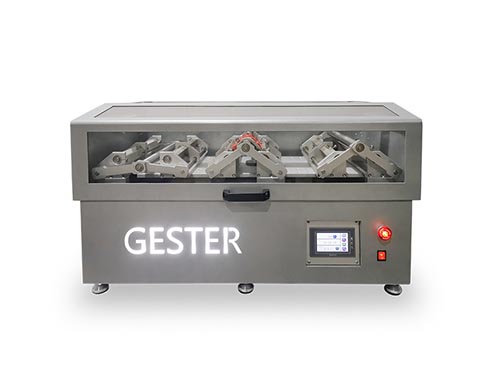
Bennewart Method EN Sole Flexing Tester GT-KB06

Bennewart Method: EN Sole Flexing Tester GT-KB06
A shoe sole may wear out and crack or break due to the strain generated by the flexing action of the foot. Cracking or fracturing can also occur from sharp edges cutting notches and punctures, which will gradually turn into cracks during continuous flexion. It is therefore important to test the flex-crack resistance of shoe soles, and the Bennewart method is one of the methods used to test the resistance of shoe soles to cracking.
Bennewart method

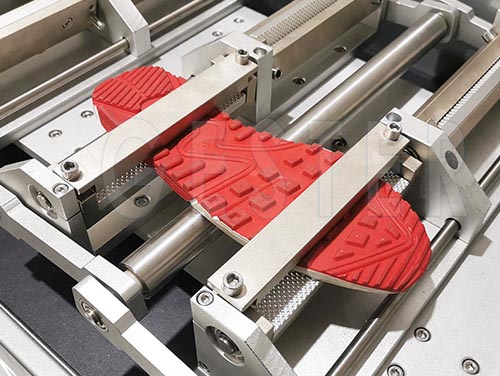
Sole flexing tester is used to measure the flexing resistance of shoe soles under continuous motion. Before the test, several holes are drilled at the position of maximum bending and Mount the specimen between two fixtures: a fixed clamp and a movable actuator. The specimen bends with the movement of the machine. After a certain number of test cycles, the specimen is removed and the difference in cut length is checked.


Test Steps


  • Preparation of samples: Select the sole samples that meet the standard requirements and Cut specimens to dimensions specified in ISO 17707. A minimum of 3 specimens are required per test.


  • Sample fixing: Fix the sole sample on the testing machine to ensure it is flat, vertical and stable. At the maximum bending stress line of the anti-slip pattern of the sole, use a notching knife to penetrate three small openings.


  • Start test: Start the bennewart flexing machine and perform several bending tests. During the test, the degree of deformation and cracks on the sole should be carefully observed.


  • Evaluation of results: After the test is completed, use a magnifying glass to inspect the degree of extension resistance of the sole, measure the final length of the cut on the surface of the specimen and compare it with the initial cut length. According to the standard requirements or product specifications, the test results are evaluated to judge whether the durability and bending performance of the sole meets the requirements.


  • Record data: Record the test results, including test parameters, test results, sample information, etc., for quality control documentation.

Main technical Specification

  • Bending angle: 90±2 , but can also be adjusted according to the test requirements.


  • Mandrel diameter : 30mm, used to support the sole sample for bending.


  • Bending speed: usually between 125-150cpm, but can be adjusted according to the test standard or demand.


  • Width of fixture: to ensure stable fixation of the sole sample during the testing , the width is usually designed according to the size of the sole.


  • Structure: The sole flexing tester usually comprises an electromechanical actuator, PLC control system, load cell, and specimen clamping assembly.

Precautions

During test, Strictly follow operational protocols to prevent equipment damage.

The test parameters should be selected and set according to the actual needs to ensure the accuracy and reliability of the test results.

After each use of the bennewart flexing machine, the sole flexing tester  should be cleaned and maintained to ensure the normal operation and service life of the testing machine.

ISO 105-X12 Standard Guidelines for Colour Fastness to Rubbing

ISO 105-X12 Standard: Guidelines for Colour Fastness to Rubbing

ISO 105-X12 specifies a method for determining the colour fastness of textiles to rubbing (crocking), using an electronic crockmeter. This section details the key aspects of the standard.

I. Scope

ISO 105-X12 is applicable to all types of textiles for the determination of colour fastness to rubbing (crocking). Examples include textile floor coverings (e.g., carpets), pile fabrics, and other conventional textiles. The method simulates rubbing under controlled dry and wet conditions.

II. Principle

Specimens are rubbed under controlled conditions with a dry rubbing cloth and a separate wet rubbing cloth. The colour fastness is then assessed by comparing the degree of staining on the rubbing cloths.

III. Apparatus

The testing device stipulated in ISO105-X12 standard mainly includes Electronic Crockmeter, rubbing cloth, grey card and so on.

1. Test apparatus: The crockmeter produces reciprocating motion with two interchangeable friction heads:

-For pile fabrics and textile carpets: rectangular head (19 mm × 25.4 mm), applying downward force of 9±0.2N, and reciprocating back and forth along the straight line trajectory of 104±3mm in length.

-For other textiles, the friction head consists of a cylinder with a diameter of 16±0.1mm, both heads apply a downward force of 9 N ± 0.2 N, along the length of 104±3mm linear trajectory back and forth reciprocating motion.

2. Rubbing cloth: desized and bleached cotton fabric without finish, without finishing, and according to the test requirements cut into the appropriate size.

3. Grey card: used to evaluate the staining level of the sample after rubbing, according to ISO105-A03 standard.

IV. Procedure

1. Specimen preparation: Cut representative samples as specified in the standard.

2. Installation of friction device: choose suitable friction head and friction cloth according to the type of sample and install them on the testing instrument.

3. Conduct friction test: Conduct dry friction and wet friction test respectively and record the relevant data during the test.

4. Evaluate the result: Use grey card to evaluate the colour staining level of the sample after rubbing, and get the colour fastness level of textiles to rubbing.

V. Precautions

  • During the test, the consistency of the test conditions should be ensured to avoid influencing the test results.


  • The use of grey card should be in strict accordance with the standard regulations to ensure the accuracy of the evaluation results.


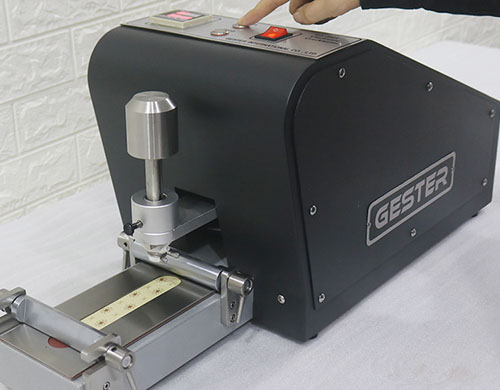
electronic crockmeter


GESTER Electronic Crockmeter complies with the following standards:

BS 1006- D02, ISO 105- X12/D02, AATCC 8/165, ASTM D6279, JIS L 0849 Type1,JIS L 0862 Type1

AATCC Crockmeter is used to determine the colour fastness of textiles to dry or wet rubbing. A pinned acrylic sample holder ensures rapid sample mounting and repeatability of results.