Bennewart Method EN Sole Flexing Tester GT-KB06

Bennewart Method: EN Sole Flexing Tester GT-KB06
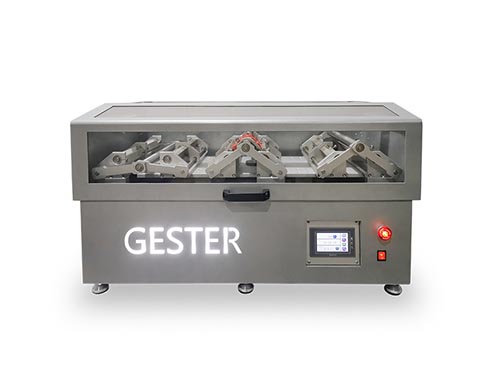
A shoe sole may wear out and crack or break due to the strain generated by the flexing action of the foot. Cracking or fracturing can also occur from sharp edges cutting notches and punctures, which will gradually turn into cracks during continuous flexion. It is therefore important to test the flex-crack resistance of shoe soles, and the Bennewart method is one of the methods used to test the resistance of shoe soles to cracking.
Bennewart method

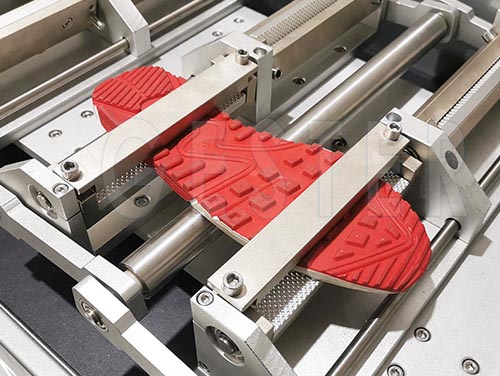
Sole flexing tester is used to measure the flexing resistance of shoe soles under continuous motion. Before the test, several holes are drilled at the position of maximum bending and Mount the specimen between two fixtures: a fixed clamp and a movable actuator. The specimen bends with the movement of the machine. After a certain number of test cycles, the specimen is removed and the difference in cut length is checked.


Test Steps


  • Preparation of samples: Select the sole samples that meet the standard requirements and Cut specimens to dimensions specified in ISO 17707. A minimum of 3 specimens are required per test.


  • Sample fixing: Fix the sole sample on the testing machine to ensure it is flat, vertical and stable. At the maximum bending stress line of the anti-slip pattern of the sole, use a notching knife to penetrate three small openings.


  • Start test: Start the bennewart flexing machine and perform several bending tests. During the test, the degree of deformation and cracks on the sole should be carefully observed.


  • Evaluation of results: After the test is completed, use a magnifying glass to inspect the degree of extension resistance of the sole, measure the final length of the cut on the surface of the specimen and compare it with the initial cut length. According to the standard requirements or product specifications, the test results are evaluated to judge whether the durability and bending performance of the sole meets the requirements.


  • Record data: Record the test results, including test parameters, test results, sample information, etc., for quality control documentation.

Main technical Specification

  • Bending angle: 90±2 , but can also be adjusted according to the test requirements.


  • Mandrel diameter : 30mm, used to support the sole sample for bending.


  • Bending speed: usually between 125-150cpm, but can be adjusted according to the test standard or demand.


  • Width of fixture: to ensure stable fixation of the sole sample during the testing , the width is usually designed according to the size of the sole.


  • Structure: The sole flexing tester usually comprises an electromechanical actuator, PLC control system, load cell, and specimen clamping assembly.

Precautions

During test, Strictly follow operational protocols to prevent equipment damage.

The test parameters should be selected and set according to the actual needs to ensure the accuracy and reliability of the test results.

After each use of the bennewart flexing machine, the sole flexing tester  should be cleaned and maintained to ensure the normal operation and service life of the testing machine.
ISO 105-X12 Standard Guidelines for Colour Fastness to Rubbing

ISO 105-X12 Standard: Guidelines for Colour Fastness to Rubbing

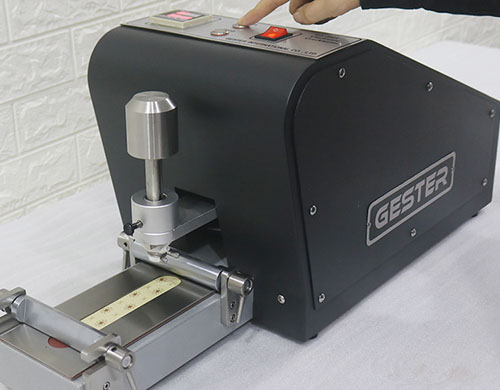
ISO 105-X12 specifies a method for determining the colour fastness of textiles to rubbing (crocking), using an electronic crockmeter. This section details the key aspects of the standard.

I. Scope

ISO 105-X12 is applicable to all types of textiles for the determination of colour fastness to rubbing (crocking). Examples include textile floor coverings (e.g., carpets), pile fabrics, and other conventional textiles. The method simulates rubbing under controlled dry and wet conditions.

II. Principle

Specimens are rubbed under controlled conditions with a dry rubbing cloth and a separate wet rubbing cloth. The colour fastness is then assessed by comparing the degree of staining on the rubbing cloths.

III. Apparatus

The testing device stipulated in ISO105-X12 standard mainly includes Electronic Crockmeter, rubbing cloth, grey card and so on.

1. Test apparatus: The crockmeter produces reciprocating motion with two interchangeable friction heads:

-For pile fabrics and textile carpets: rectangular head (19 mm × 25.4 mm), applying downward force of 9±0.2N, and reciprocating back and forth along the straight line trajectory of 104±3mm in length.

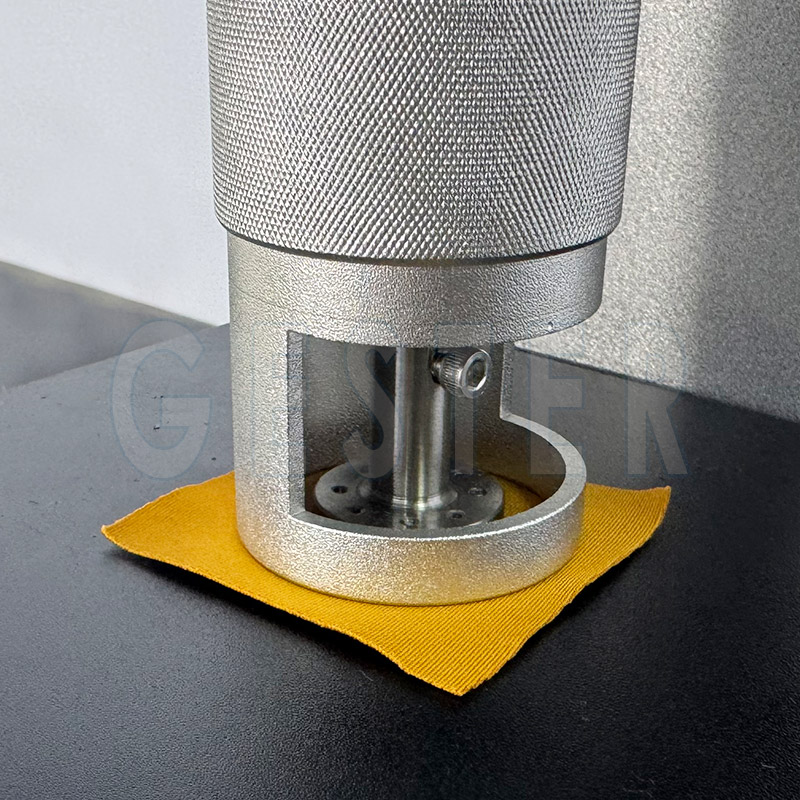
-For other textiles, the friction head consists of a cylinder with a diameter of 16±0.1mm, both heads apply a downward force of 9 N ± 0.2 N, along the length of 104±3mm linear trajectory back and forth reciprocating motion.

2. Rubbing cloth: desized and bleached cotton fabric without finish, without finishing, and according to the test requirements cut into the appropriate size.

3. Grey card: used to evaluate the staining level of the sample after rubbing, according to ISO105-A03 standard.

IV. Procedure

1. Specimen preparation: Cut representative samples as specified in the standard.

2. Installation of friction device: choose suitable friction head and friction cloth according to the type of sample and install them on the testing instrument.

3. Conduct friction test: Conduct dry friction and wet friction test respectively and record the relevant data during the test.

4. Evaluate the result: Use grey card to evaluate the colour staining level of the sample after rubbing, and get the colour fastness level of textiles to rubbing.

V. Precautions

  • During the test, the consistency of the test conditions should be ensured to avoid influencing the test results.


  • The use of grey card should be in strict accordance with the standard regulations to ensure the accuracy of the evaluation results.


electronic crockmeter


GESTER Electronic Crockmeter complies with the following standards:

BS 1006- D02, ISO 105- X12/D02, AATCC 8/165, ASTM D6279, JIS L 0849 Type1,JIS L 0862 Type1

AATCC Crockmeter is used to determine the colour fastness of textiles to dry or wet rubbing. A pinned acrylic sample holder ensures rapid sample mounting and repeatability of results.

Understanding the Circular Rubbing Colour Fastness Tester Principle, Features, Operation

Understanding the Circular Rubbing Colour Fastness Tester:

Principle, Features, Operation


This Circular Rubbing Colour Fastness Tester is used for assess colored materials friction damage and surface color transfer. It is suitable test the upper materials, such as leather, plastics and fabric etc.


Circular Rubbing Colour Fastness Tester


Principle
Under constant pressure condition, rubbing can be carried out in dry or wet circle wool felt, the machine will stop when the preset rub count has bees reached. Fastness can be judged by the effect on the sample material or the transfer of color to the rubbing pad and assessed by reference to a standard gray scale.

Features
  • Test methods: dry rubbing, wet rubbing, perspiration rubbing, alcohol rubbing, organic liquids rubbing. (The probational liquid need to be prepared by customers)
  • The counter can pre-determined test counts and show actual test count. The machine will stop when the preset count has been reached.
  • Memory function: when preset count has not been reached, if to stop test by manual, the current number of test will be saved until to clear it to zero or continue testing; if to shutdown and restart the machine, the current data will be clear to zero, the preset count would be the value of last set.
  • According to different requirements of testing, can be applied to correspondent load.

How to Conduct the Circular Rubbing Colour Fastness Tester

Acceptance:
Inspection accessories (according to order): Square iron block (dry rubbing test after organic solvent is moistened from the back), round aluminum block (help to cool sample during dry rub test), weight.

Prepartion:
Adjust the level of the Circular rub fastness tester according to the level.
Confirm the power supply and connect it. Turn on the power switch and emergency stop switch.
Click "English" to enter the test interface.
Click "Micro" to check if the machine is working properly.
Make sure the friction head is lifting and lowering normally without any jamming.

Dry rub test operation:
Install the wool felt: Lift the fixture and install the wool felt on it.
Place the specimen test side up and lower the fixture.
Install the weights.

Parameter settings:
Test times setting: Click "English", click "SETTING" to enter the parameter interface,
there are "Counter" and "Timer" modes, select "Counter" mode, click to set the number of times 64.
Speed set: 150 ± 5r/min.
Click "TEST" to return to the test interface, click "Zero" to clear, click "TEST" to start test.

For specimens with low melting or softening temperature coatings on the surface during testing, the machine should be stopped periodically to avoid heat damage.
A round aluminum block was placed over the area where the specimen was rubbed, and the specimen was placed on the circular aluminum block and allowed to sit for 30 seconds to help remove the heat before the test was continued.

When the testing cycles is reached, it will stop automatically. Lift up the fixture, remove the specimen and observe.

How to order an automatic machine for your product?

How to order an automatic machine for your product?


Sinuowei team design and manufacture automatic assembly machine with 10 year of experience.

We have sold hundreds of machines already at home and abroad and they are working very well so far.

As time went by, our machine becomes even more sophisticated with higher efficiency and greater stability.


What we produce is a customizable non-standard automation equipment.

It is very different from the standard machine with uniform industry standards and specifications for manufacturing equipment.

The non-standard machine will be designed and adjusted according to the structure of the parts of the product as clients’ requirements.

The client gets a machine which will meet with the demand of the client absolutely.
You can just contact us to design and manufacture a full automation machine for you when you encounter the following situations:


  • If the labor cost of your product is too high;
  • If the supply of your product falls short of demand;
  • If the quality of your product is not easy to control.


Every machine is different.

Therefore, the product details are necessary before getting the right quotation.

How to order an automatic machine for your product?

You need to know the steps as following:


Step 1

You can send us your product picture to us with the semi-finished product and finished product.

And we can show the picture to our designer to know whether your product can be made by this kind of automation assembly machine.


Step 2

When we confirmed that your product is ok for an automatic machine. You can provide us the data as follows:

  1. The real product picture with semi-finished and finished.
  2. It is necessary to provide us the size in each part,If you can provide us the design draw,that will be great.
  3. How do you make your products manually? Can you provide us the video of each step?

Our designers will get an insight to understand your product. The model of our automated machine can be designed in preliminary.

Since the information you have provided as above, we can reply as follows:

  1. Price;
  2. Efficiency;
  3. The brand of the main configuration;
  4. Operation scheme.

Step 3

If you think the Initial quotation if ok for you. Welcome to visit our factory to confirm more details of your machine.

And we will make a contract as both views at the meeting. Please send us some sample with semi-finished and finished asap.

If your deposit arrived, we will submit the order to our production department to arrange design and manufacture according to the signed contract.


Step 4

There are two things shall be arranged before delivery.

One is acceptance, the other is technology training

  1. When the machine to be finished, we will invite the client to see their machine. Upon the acceptance of the machines by the client, the second deposit shall be paid within 10 days after acceptance in the first time.
  2. When the second deposit to be paid, the Client can send their technicians to receive machine technology training about one or two weeks in our factory. We will provide room and board for them.
  3. After technology training,we will invite client acceptance in the second time. The machine will be packet in import stand plywood box and delivery to the port when the balance to be received after final acceptance.

Step 5

Client shall make all the preparations about power, air source, installation place in advanced.

When the machine arrived, your trained technicians will arrange installation of the machine easily.

Better material will be used in export machine. Though thousand times of debugging to make sure everything goes well in the future.

We will provide some free vulnerable parts and the design draw for our client.

Up to know, xmsinuowei machine running very well in our clients’ factory. And they can handle all the things by themselves.


Step 6

The warranty period shall be 12 months counting from the date when the buyer balance to be received after sign the of Final Acceptance.

After the quality guarantee period, we still provide toll-free technical support.

We will feedback within 24 hours and solve the problem according to the pictures, descriptions, and videos of the fault location provided by customers.

If there has the problem that customers can't solve by themselves. We will send technicians over there and their salary about $150 per day. All cost will be borne by the client.


How to Debug a Oil Type Mold Temperature Controller?

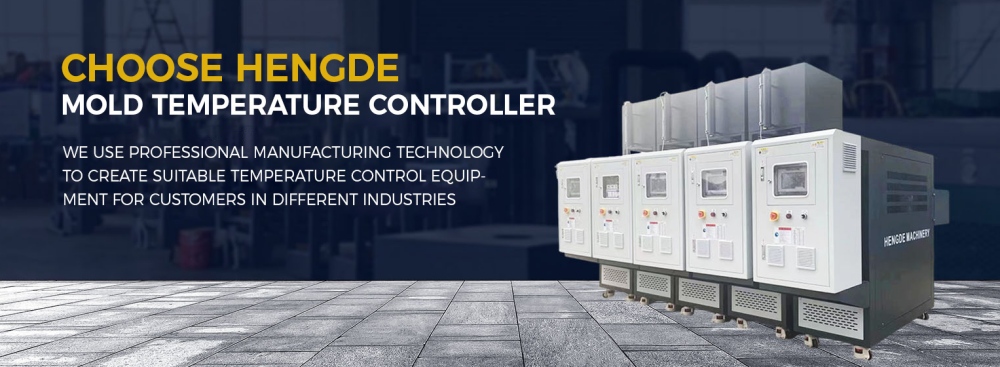
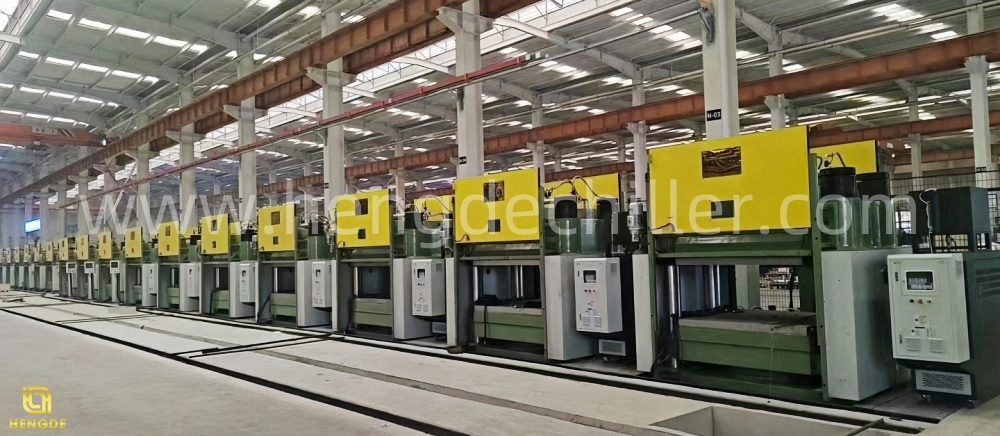
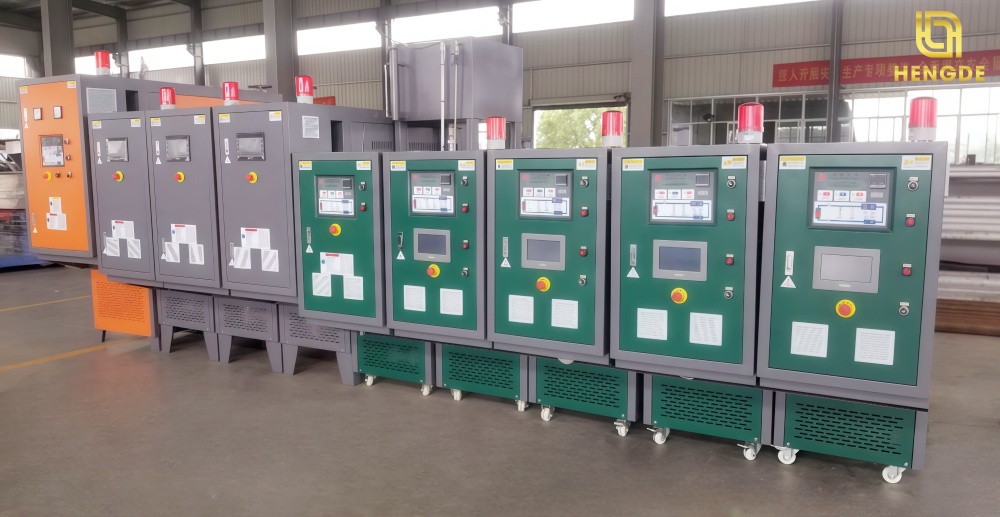
Hengde Company, a renowned name in the industrial temperature control realm, has been committed to providing high quality mold temperature controllers for years. Our products are widely applied across various industries, characterized by their reliability, precision, and advanced technology. With a professional R & D team and excellent after - sales service, we ensure that every customer can make the most of our mold temperature controllers. Now, let's explore the professional debugging process of our mold temperature controllers.

Mold Temperature Controller


Debugging Steps of the Oil Type Mold Temperature Controller

1. Preparation

Before commencing the debugging, ensure the availability of a stable power supply and high quality thermal oil. 


2. Power Connection

Push the air switch and then turn on the power button. In case the air switch fails to be pushed up, check if the emergency stop button on the controller panel is pressed. If so, rotate the emergency stop button to its normal position.

After turning on the power button, if the oil type mold temperature controller alarms, it is likely due to a phase - reversal issue. Immediately turn off the power supply and swap any two of the three incoming power lines. Once the phase - reversal problem is resolved, the controller can start normally.


3. Oil Filling

After starting the machine, the oil mold temperature machine will trigger an oil shortage alarm. Gradually add thermal oil, until the entire pipeline is filled with oil and the oil shortage alarm in the oil tank ceases. Be cautious not to over fill the oil tank. As the oil heats up, the tank will release gas. Excessive oil may cause the gas to force the oil out of the tank.

After oil filling, carefully inspect all pipelines of the oil mold temperature machine for any oil leaks. Once the pressure shown on the pressure gauge of the oil temperature machine stabilizes, the heating process can be initiated.


4. Heating

Set the temperature on the controller for heating. Initially, set the temperature to 90℃ and closely monitor the stability of the pressure gauge. If the pressure gauge remains stable, it is safe to directly set the temperature to the required operating temperature.


Mold Temperature Controllers


Precautions

  1. Prior to starting the machine, always double - check whether the emergency stop button on the oil mold temperature controller panel is in the released state. A pressed emergency stop button will prevent the air switch from being closed.
  2. During the heating process, if there is a significant difference between the oil outlet temperature and the oil return temperature, with the oil outlet temperature rising rapidly, it is highly likely that the filter is blocked. Before further heating, remove and clean the filter to ensure normal oil circulation.
  3. If the oil mold temperature controller alarms for oil - shortage or lack of media, it may be caused by poor contact of the liquid level sensor (the cylindrical tube adjacent to the oil tank). Usually, a slight adjustment of the sensor can solve this problem. If the liquid level alarm function is not required, simply unplug the wire above the sensor.


After the debugging process is completed, it is crucial to record all the debugging parameters and the operating status of the mold temperature controller accurately. Compile these records into a detailed debugging report. Once the oil mold temperature controller is put into formal operation, regular maintenance and inspections should be carried out at fixed intervals. This ensures that the controller always operates in an optimal condition, providing reliable temperature control for your production processes.


At Hengde Company, we not only offer top - tier mold temperature controllers but also comprehensive support throughout the product lifecycle. Our professional team is always ready to assist you, ensuring that your investment in our products brings long - term benefits and efficient production.


Choose Hengde,Choose Perfect Mold Temperature Controller!

Water Mold Temperature Controllers

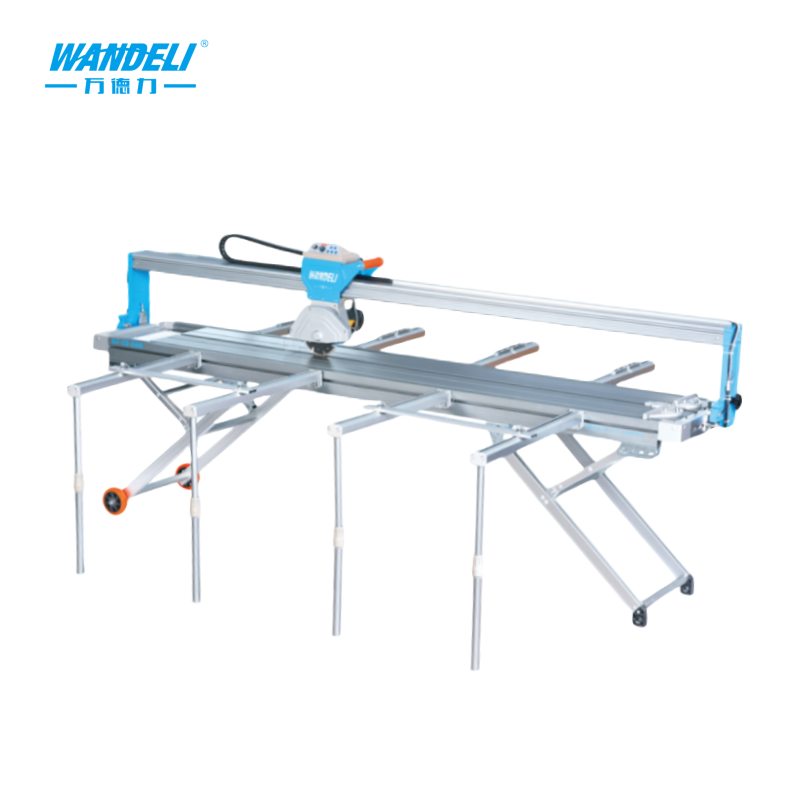
How Automatic Electric Tile Cutters Improve Large-Scale Tile Installations

When it comes to large-scale tile installation projects—whether it's commercial buildings, malls, airports, or major housing developments—efficiency, accuracy, and consistency are critical. One of the most essential tools for such jobs is the automatic electric tile cutter. Unlike manual tile cutters, which require significant physical effort and skill, automatic machines bring precision and productivity to a whole new level.

If you're a contractor, tile installer, or procurement officer looking to optimize your project workflow, here's how investing in an automatic electric tile cutting machine can completely transform the way you work.


1. Speed That Matches Project Demands

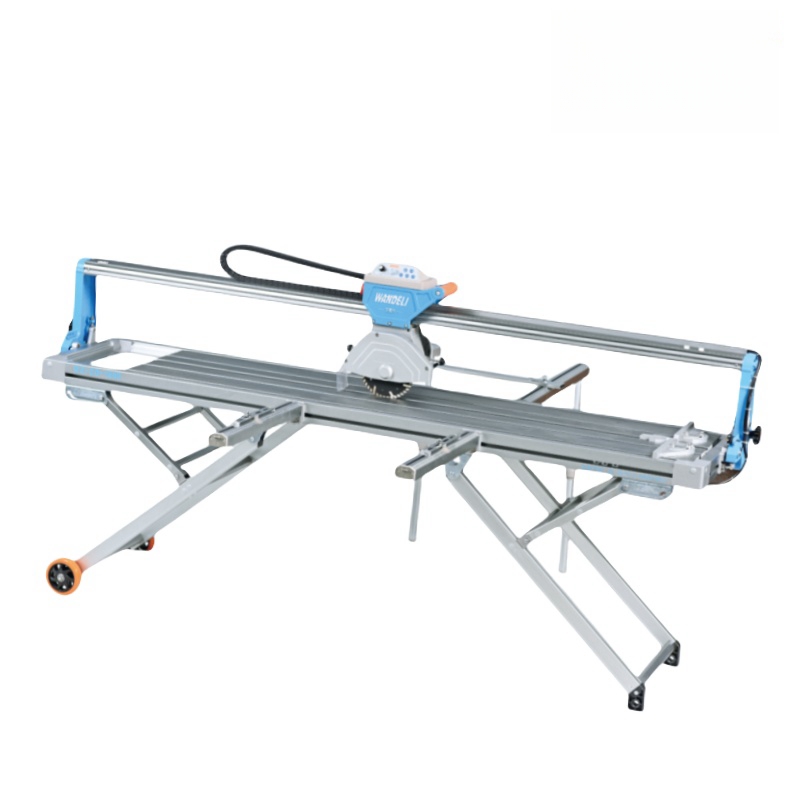
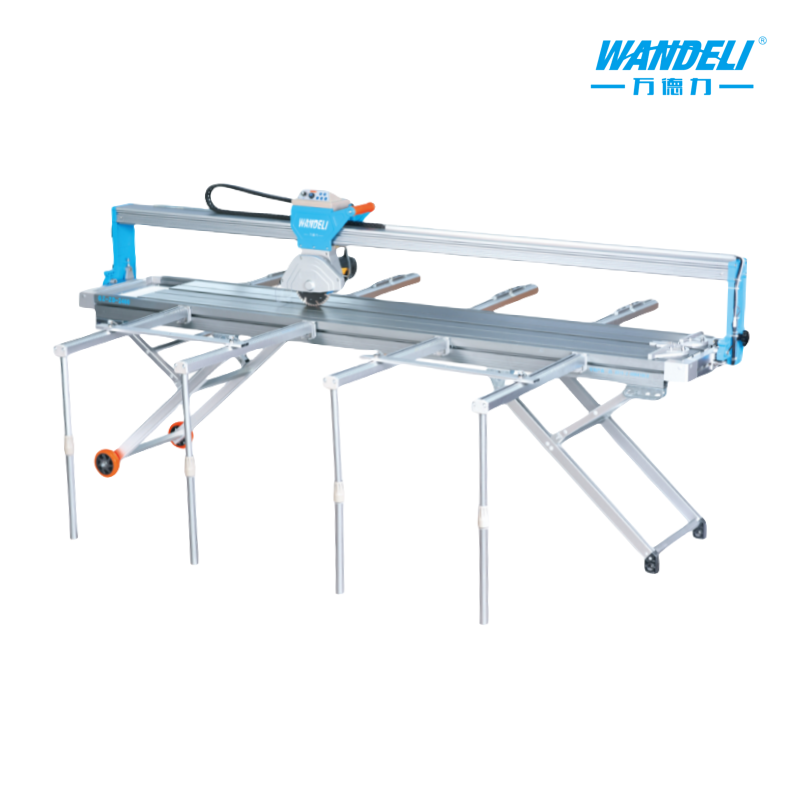
In large-scale projects, time is money. Automatic tile cutters can process tile after tile with minimal human intervention. Machines like the Wandeli QX-ZD-1200 or QXZ-ZD-1800 feature high-speed cutting mechanisms, allowing operators to cut dozens of tiles in just minutes. These are ideal for professionals who need reliable, consistent performance in high-pressure environments.


2. Precision Cuts for a Professional Finish

Consistency is one of the main challenges in big tile projects. Manual cutting can lead to uneven edges, chipped corners, and costly waste. Electric tile cutters with laser guides and water systems ensure clean, accurate cuts every time—even on hard materials like porcelain and ceramic tiles. This precision results in a more professional finish, boosting customer satisfaction and minimizing rework.


3. Efficient for Repetitive Work

Automatic tile cutters are designed for repetitive, continuous cutting tasks. With programmable settings and adjustable rails, users can quickly replicate the same cuts over and over with zero variation. This drastically reduces operator fatigue and improves overall project workflow. Explore our full range of electric tile cutters here.


4. Less Dust, Less Mess

Dust is a major concern in tile installations. Many automatic tile cutting machines come with built-in water cooling systems that not only preserve blade life but also reduce dust—keeping the workspace cleaner and safer for operators.


5. Lower Labor Costs and Higher ROI

One operator can control the entire cutting process with an automatic machine, unlike traditional manual cutters that may require two or more workers for volume cutting. Over time, this means lower labor costs, less material waste, and a higher return on investment for large construction projects. These machines are a smart investment for any growing construction business.


6. Ideal for All Tile Types and Sizes

From standard floor tiles to large-format ceramic slabs, automatic machines like the Wandeli QXZ-ZD-2460 are engineered to handle a wide variety of sizes and materials. With powerful motors and customizable cut lengths, these machines meet the needs of even the most demanding installations.


Conclusion: Upgrade Your Workflow with Wandeli Electric Tile Cutters

For large-scale tile installation projects, investing in an automatic electric tile cutter is no longer a luxury—it’s a necessity. Whether you're managing commercial tiling, residential developments, or public infrastructure, machines like the Wandeli QX-ZD-1200, QXZ-ZD-1800, and QXZ-ZD-2460 offer the power, precision, and efficiency your team needs to succeed.


Want to compare manual and electric models? Read our Electric vs Manual Tile Cutter Guide.
Need support or want to become a dealer? Contact Wandeli Machinery for inquiries.


Which One Should You Choose Electric vs Manual Tile Cutters


When it comes to tile installation projects, selecting the right tool can make all the difference in speed, accuracy, and final appearance. Two of the most popular options are electric tile cutters and manual tile cutters. Below, we compare their strengths and ideal use cases to help you decide which one fits your needs.


Power & Performance

Electric tile cutters are driven by powerful motors — for example, Wandeli’s 4500 W brushless motor — making quick work of thick porcelain panels, large-format ceramic tiles, and stone slabs. They deliver consistent power for clean, chip-free cuts.


Manual tile cutters rely on a scoring wheel and snapping mechanism. They’re great for standard ceramic tile or small porcelain tiles but can struggle with harder materials or very thick slabs


Precision & Cut Quality

Electric saws with laser guides and water-cooled blades guarantee precise straight cuts, perfect for professional installations and intricate layouts.
Manual cutters offer good straight cuts on standard tiles, but any angled cuts or specialty shapes require additional hand tools or grinders.


Speed & Efficiency

Electric machines complete cuts in seconds and handle repetitive tasks without fatigue, making them ideal for large jobs and commercial projects.
Manual cutters are more time-consuming, especially for angled or miter cuts, but they shine on small DIY projects where portability and simplicity matter.


Dust & Noise

Most automatic electric tile cutters integrate wet-cut systems that suppress dust and reduce blade friction, producing a cleaner workspace. Noise levels are moderate, and brushless motors run quieter than brushed models.
Manual cutters are virtually silent and dust-free but generate ceramic shards when snapping tiles, so cleanup is still required.


Portability & Setup

Manual tile cutters are lightweight, require no power source, and are ready to use on any site in seconds.
Electric tile cutters need a power outlet or generator and take a bit longer to set up but often fold up or come with wheels for transport.


Cost Considerations

Manual cutters are very affordable and excellent for occasional use.
Electric cutters range from mid-range to premium professional units (like Wandeli’s 4500 W brushless models). They represent a higher investment but offer unmatched performance and ROI for frequent use.


What Is the Best Tile Cutter for Porcelain and Ceramic Tiles

Choosing the best tile cutter depends on the material you’re working with and the level of performance required. Below are the top considerations:


Porcelain Tile Cutter

– High Power: Look for a 4500 W brushless motor or similar, since porcelain is dense and brittle.
– Wet-Cut Capability: To prevent cracks and suppress dust, a water-cooled blade is essential.
– Laser Guide & Stable Rails: Ensures ultra-straight cuts without chipping.


Ceramic Tile Cutter
– Moderate Power: A 1 500–2 000 W motor is often sufficient for standard ceramic tiles.
– Portability: If you’re only cutting ceramic, a compact electric or even a quality manual cutter will do.
– Easy Blade Changes: Ceramic blades dull faster, so quick-release mechanisms save time.


Large-Format Boards & Slabs
– Extended Cutting Length: A rail system of at least 1.2 m handles large slabs.
– High-Torque Motor: Ensures smooth cuts through very thick material.


Professional vs DIY
– Professional Contractors should invest in an automatic electric tile cutting machine with a powerful brushless motor, precision guide, and wet-cut system for durability and speed.
– DIY Enthusiasts on a budget may prefer a manual tile cutter or entry-level electric model for occasional small-scale jobs.


Why Wandeli Electric Tile Cutting Machines Stand Out

– 4500W Brushless Motor Power for the toughest porcelain and ceramic slabs
– Wet-Cut & Water Recycling System to keep your worksite clean
– Laser-Guided Precision and stable rail design for perfect straight and angle cuts
– Durable, low-maintenance construction built for professional use


Whether you need the ultimate precision for porcelain panels or a cost-effective solution for ceramic floors, Wandeli has the right electric tile cutting machine to elevate your craftsmanship.

Customer case sharing marble cutting machine to improve production efficiency of the successful experience

In the construction and decoration industry, marble is widely welcomed for its beauty and durability. However, the difficulty and process requirements of cutting marble make many companies face challenges in production efficiency. By introducing an advanced marble cutting machine, a medium-sized stone processing company has successfully improved its production efficiency. The following is their experience to share.


backdrop


Located in an area rich in stone resources, the company mainly provides various types of marble panels and custom processing services. Previously, they used traditional cutting equipment, with low production efficiency and cutting accuracy that could not meet market demand. This makes the enterprise at a disadvantage in the fierce competition, and the customer loss is serious.


Equipment upgrade


After market research and technical evaluation, the company decided to invest in an advanced marble cutting machine. The equipment features automatic control, high cutting speed and high precision, and can adapt to different thicknesses and sizes of marble. The equipment supplier also provides professional training to ensure that employees can skillfully operate the new machines.


Remarkable effect


Production efficiency: After the introduction of new equipment, the production efficiency of the enterprise has been significantly improved. Cutting times have been reduced by approximately 30%, enabling more orders to be fulfilled in the same amount of time. This not only increases production capacity, but also reduces customer complaints due to production delays.


Improved cutting accuracy: The high-precision cutting technology of the new equipment makes the edge of the product more flat and reduces the difficulty of subsequent processing. This enables companies to provide higher quality products and win the trust and praise of customers.


Reduce waste: In the traditional cutting process, the material waste caused by inaccurate cutting is serious. The new cutting machine reduces waste generation and production costs by optimizing the cutting path.


Increased employee satisfaction: With increased productivity, employees' work stress is reduced and the working environment is improved. The new equipment is easy to operate, the skill level of employees is improved, and overall job satisfaction is significantly increased.


Long-term effect


After a few months of operation, the company's market share began to pick up, and improved customer satisfaction led to more repeat customers and new customers. The company also took advantage of the increased production capacity, expanded the product line, and began to experiment with customized services to meet the needs of different customers. This flexibility puts them in a better position to compete in the market.


Sum up


By introducing advanced marble cutting machines, the company has not only improved production efficiency, but also improved product quality and employee satisfaction. This successful experience shows that investing in technology updating and equipment upgrading can bring significant economic benefits and market competitiveness for enterprises. In the stone processing industry, continuous attention to technological progress and market demand is the key to enterprise development.


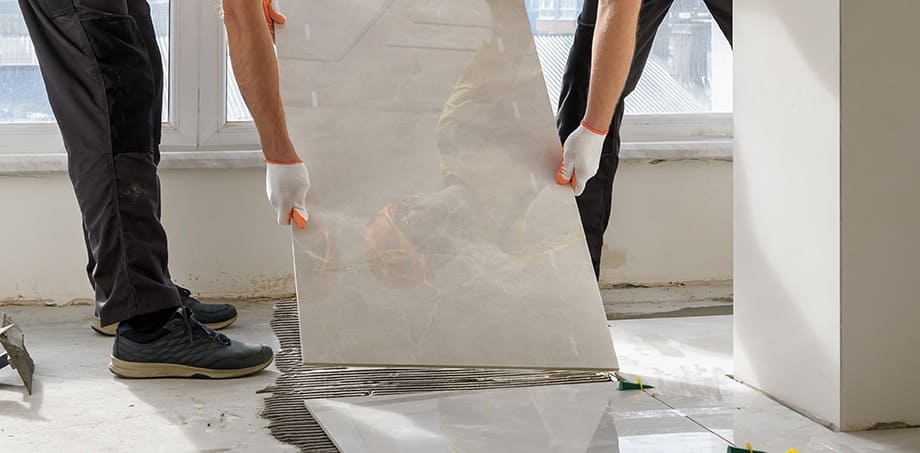
marble tile laser cutting machineelectric marble tile cutting machine

Stone cutting machine is widely used to meet the needs of different stone processing

Stone cutting machine is used for cutting and processing all kinds of stone professional equipment, widely used in construction, decoration, engraving, sculpture and other industries. With the continuous progress of technology, the performance of the stone cutting machine has been significantly improved, which can adapt to the processing needs of different types of stone and meet the production requirements. Whether it is large-scale industrial production or small-scale custom processing, stone cutting machines can provide reliable cutting solutions.


1. Cutting of various types of stone


Stone cutting machine can handle many types of stone, including marble, granite, quartz stone, sandstone and so on. The hardness, texture and texture of each stone are different, so the requirements for the cutting machine are also different. The modern stone cutting machine is equipped with advanced cutting technology, which can adjust the cutting parameters according to the characteristics of different stones to ensure that the flat and smooth cutting effect can be achieved on various stones. This adaptability makes the stone cutting machine have a wide range of application prospects in the stone processing industry.


2. Production capacity


The stone cutting machine adopts high-speed cutting and control system, which greatly improves the cutting speed and processing accuracy. The equipment can run stably for a long time, ensuring production efficiency and reducing downtime. In a large-scale production environment, stone cutting machines are particularly important to meet the needs of fast delivery. In addition, the automated operating system reduces manual intervention, improves the stability and consistency of the processing process, and reduces production costs.

3. Cutting effect


The cutting precision of the stone cutting machine is very high, and it can achieve fine cutting and complex shape processing. Whether in cutting straight lines, curves, or small size carving, stone cutting machines can provide very accurate cutting results. This is of great significance for projects that require accurate cutting, such as decorative stone, carved artwork, etc. High-precision cutting not only improves the appearance quality of the stone, but also reduces waste and saves raw materials.


4. Wide range of applications


Stone cutting machine has been widely used in many fields. For example, in the construction industry, stone cutting machines are used for the cutting and processing of marble, granite and other building materials, and for the construction of ground, wall, countertop and other projects. In the field of home decoration, stone cutting machines are used for the production of customized stone products, such as kitchen countertops, bathroom supplies, etc. In addition, the stone cutting machine also plays an important role in the fields of art carving and tombstone carving.


In short, the stone cutting machine, with its cutting ability, meets the processing needs of different types of stone, and plays an important role in a number of industries. With the continuous progress of technology, the performance of the stone cutting machine will be more perfect, adapt to more diversified stone processing needs, and promote the development of the industry to a more refined direction.


cutter tile cutting machinemultifunctional cutter stone tile

The development prospect of light stone cutting machine

As a kind of architectural decoration material, stone is widely used in indoor and outdoor decoration design, curtain wall decoration and public facilities construction. At present, the common stone on the market is mainly divided into natural stone and artificial stone, marble. With the development of architectural design, stone has already become one of the important raw materials for building, decoration, road and bridge construction.


At this time, as an important instrument for processing stone, stone cutting machine is bound to change to a small and convenient direction. Can be used in a variety of occasions, the advantages of light stone cutting machine gradually highlighted. This is driven by market demand and new industries, light stone cutting machine technology and electronics, information, new materials, new energy, environmental science, systems engineering, modern management and other high-tech combination formed a new light stone cutting machine technology, such as numerical control technology, clean production technology, robotics and so on.


With the development of the real estate industry today, the decoration industry is using light stone cutting machine more and more likely, the market elimination rate of inferior products is getting larger and larger, Wandeli Machinery as an old factory for many years is willing to use their own products to withstand the test of the market, looking forward to cooperating with you.