An Industrial Roller Brush is one of the most widely used tools in modern manufacturing and cleaning systems. It is a cylindrical industrial brush designed to rotate on a shaft and perform various surface treatment tasks. Because of its cylindrical structure, it is also commonly called a Cylindrical Brush.
Industrial roller brushes are used in a wide range of industries and production lines. Typical applications include:
- Conveyor belt cleaning
- Vegetable and fruit washing
- Wood board polishing
- Solar panel cleaning
- Glass washing machines
- Metal surface treatment
Because of this versatility, roller brushes have become essential components in automated production equipment.
From a manufacturing perspective, industrial roller brushes are generally divided into two main types:
- Staple Set Roller Brush
- Spiral Wound Roller Brush
Staple Set Roller Brush
A Staple Set Roller Brush is made of two main parts:
- A tube core
- Tufted bristles inserted into the tube
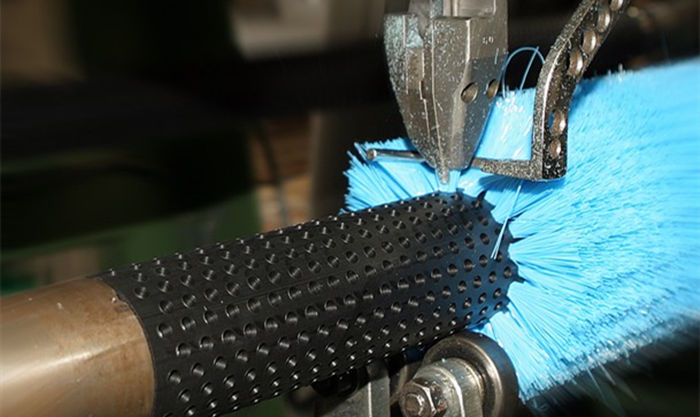
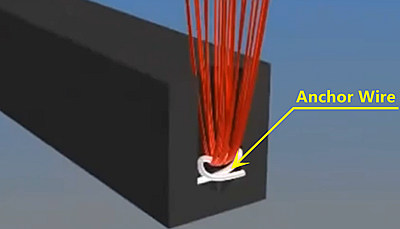
During manufacturing, the bristles are inserted into the tube in small bundles called tufts. The key component that secures the bristles inside the tube is the anchor wire. The anchor wire locks the bristle tufts firmly inside the tube to ensure that the brush does not shed during operation.
Bristle Materials
Different working environments require different filament materials. Common options include:
- Polypropylene
- Nylon
- PBT
- PE
- Steel wire
- Animal hair
Tube Materials
The tube core can be made from either plastic or metal.
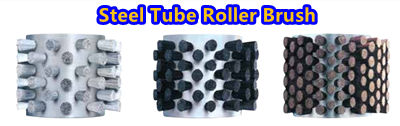
Plastic tubes commonly include:
- Nylon
- Polypropylene
- PVC
- ABS
- POM
Plastic tubes are economical and easy to manufacture.
Steel tubes may include:
- Aluminum
- Carbon steel
Steel tubes offer higher precision and structural rigidity but usually have higher production costs.
Anchor Wire Material
The anchor wire is typically made of galvanized steel. However, if the working environment involves water, chemicals, or acidic and alkaline conditions, stainless steel anchor wire is strongly recommended. Stainless steel prevents corrosion, reduces bristle loss, and significantly extends the service life of the roller brush.
How to Choose the Right Staple Set Roller Brush
Selecting the correct roller brush mainly involves three key factors.
1, Bore Diameter and Brush Length
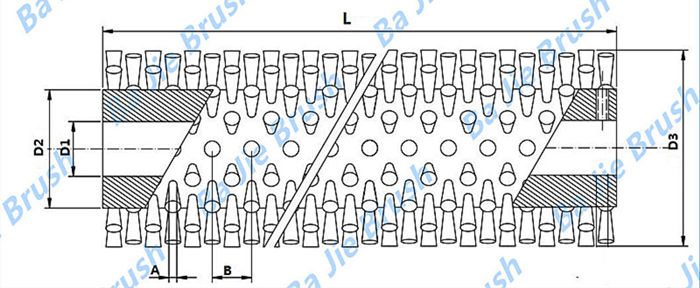
The first step is determining the bore diameter (D1) and brush length (L) according to your machine or production line. Accurate dimensions ensure proper installation and smooth operation.
2, Selecting the Right Materials
For bristle material, it depends on the application.
- For delicate surfaces such as glass, nylon filament brushes are recommended because they are soft and non-abrasive.
- For heavy cleaning or polishing tasks, steel wire brushes provide stronger scrubbing power.
- For special requirements such as anti-static applications, materials like horse hair may be used.
If you are unsure which material is suitable for your application, consulting a professional brush manufacturer is recommended.
For the tube material, plastic tubes are usually preferred because they are cost-effective. However, if the working environment has high temperatures, nylon tubes are recommended due to their better heat resistance.
Steel tubes provide higher dimensional precision and are less likely to deform. However, they increase overall production cost.
A practical solution for applications that require precise bore dimensions, such as in the woodworking industry, is to use a plastic tube with steel rings inserted at both ends. This design ensures accurate bore sizing while keeping costs relatively low.
3, Bristle Length and Density
The length and density of bristles directly affect brush performance.
- Longer bristles usually provide longer service life but lower cleaning force.
- Higher bristle density increases cleaning power.
Bristle density can be adjusted by modifying two parameters:
- A – Hole diameter
- B – Hole spacing
By controlling these factors, manufacturers can design a roller brush optimized for specific industrial applications.
Spiral Wound Roller Brush
Another common type is the Spiral Wound Roller Brush.
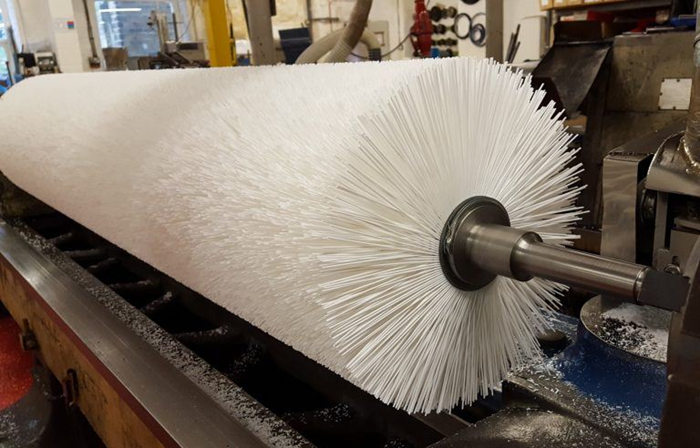
This type of brush is constructed using:
- A formed strip brush
- A steel pipe core
During manufacturing, the strip brush is bent and wound around the steel pipe in a spiral pattern. The strip is wrapped in coils along the tube, and both ends are secured by welding.
Bristle Materials
The filament materials are similar to those used in staple set roller brushes, including:
- Polypropylene
- Nylon
- PBT
- PE
- Steel wire
- Animal hair
Strip Brush Channel Types
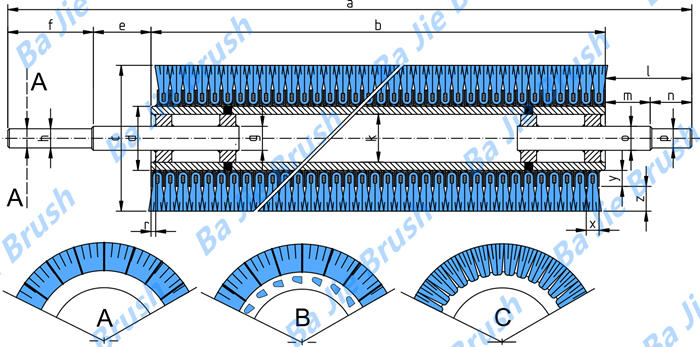
The metal channel that holds the bristles can be manufactured in three structures:
- Single Band (A) – standard strength
- Double Band (B) – medium strength
- Forced Band (C) – highest strength
How to Choose a Spiral Wound Roller Brush
The selection process is similar to choosing a staple set roller brush. However, spiral wound brushes have some distinct characteristics.
Advantages:
- Higher bristle density
- Stronger brushing performance
Disadvantages:
- Higher manufacturing cost
- Greater overall weight
Bristle density can be adjusted by changing the coil spacing (X).
When X = 0, the coils are tightly packed, creating the maximum bristle density.
Typical Applications
Spiral wound roller brushes are commonly used in the steel industry, especially in rolling mills for cleaning, polishing, or descaling steel sheets.
Installation and Dynamic Balancing
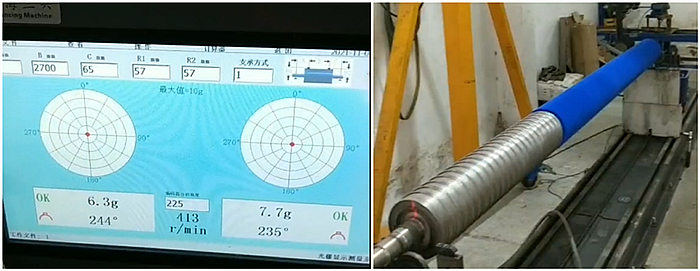
Whether you choose a staple set roller brush or a spiral wound roller brush, the brush must be installed on a steel shaft.
For high-precision industries, manufacturers can also provide dynamic balancing services. After dynamic balancing, the vibration generated during rotation is significantly reduced.
This provides two major benefits:
- More uniform surface treatment results
- Longer service life for both the roller brush and the machine
Need Help Choosing the Right Industrial Roller Brush?
Industrial roller brushes can be customized in many ways, including size, bristle material, density, and core structure. Choosing the right configuration ensures optimal performance and longer service life.
If you have any questions about industrial roller brushes, feel free to contact BaJie Brush. Our team will help you select the most suitable solution for your equipment and production line.